Data centers cannot treat power as a soft requirement. Even a short grid interruption can trip UPS autonomy, interrupt cooling, and violate customer SLAs. For colocation and enterprise halls from Africa to Asia-Pacific, the standard answer remains an on-site industrial diesel or gas generator plant sized for IT + mechanical load, with automatic transfer and tested black-start procedures.
ALEO Power designs and supplies project-based generator packages in the roughly 18 kW–2 MW class, including containerized diesel sets and hybrid options. Our Kenya data-center related work is summarized under project cases. This article outlines how EPC and facility teams should specify backup power—and when to involve the genset OEM early.
What “data center backup power” actually covers
A complete design is more than a single genset SKU:
- IT critical load (servers, storage, network) after UPS
- Mechanical load (CRAHs/CRACs, chillers, pumps, fans)—often the larger share
- House loads (lighting, BMS, security, fire systems)
- Redundancy topology (N, N+1, 2N) aligned with the Tier/Uptime target
- Fuel autonomy (hours or days) and refill logistics
- Paralleling, ATS/AMF, and integration with the UPS and switchgear
Residential “whole house” kW charts are irrelevant here. You need a load schedule, diversity factors, and motor-start analysis for chillers and CRAH fans.
Diesel vs gas for data center standby
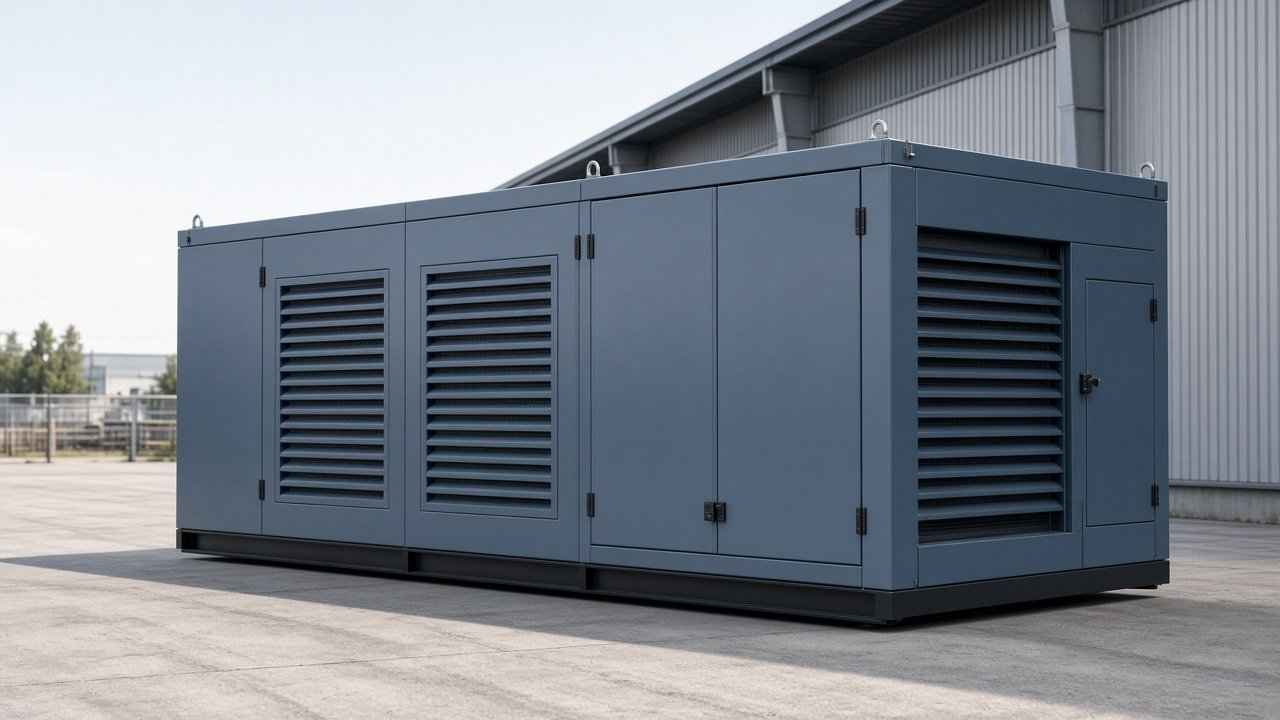
Diesel remains the default for many data centers because fuel is storable on site, black-start is well understood, and response to ATS commands is proven. Industrial diesel generator sets in containerized form factor simplify outdoor placement and acoustic treatment.
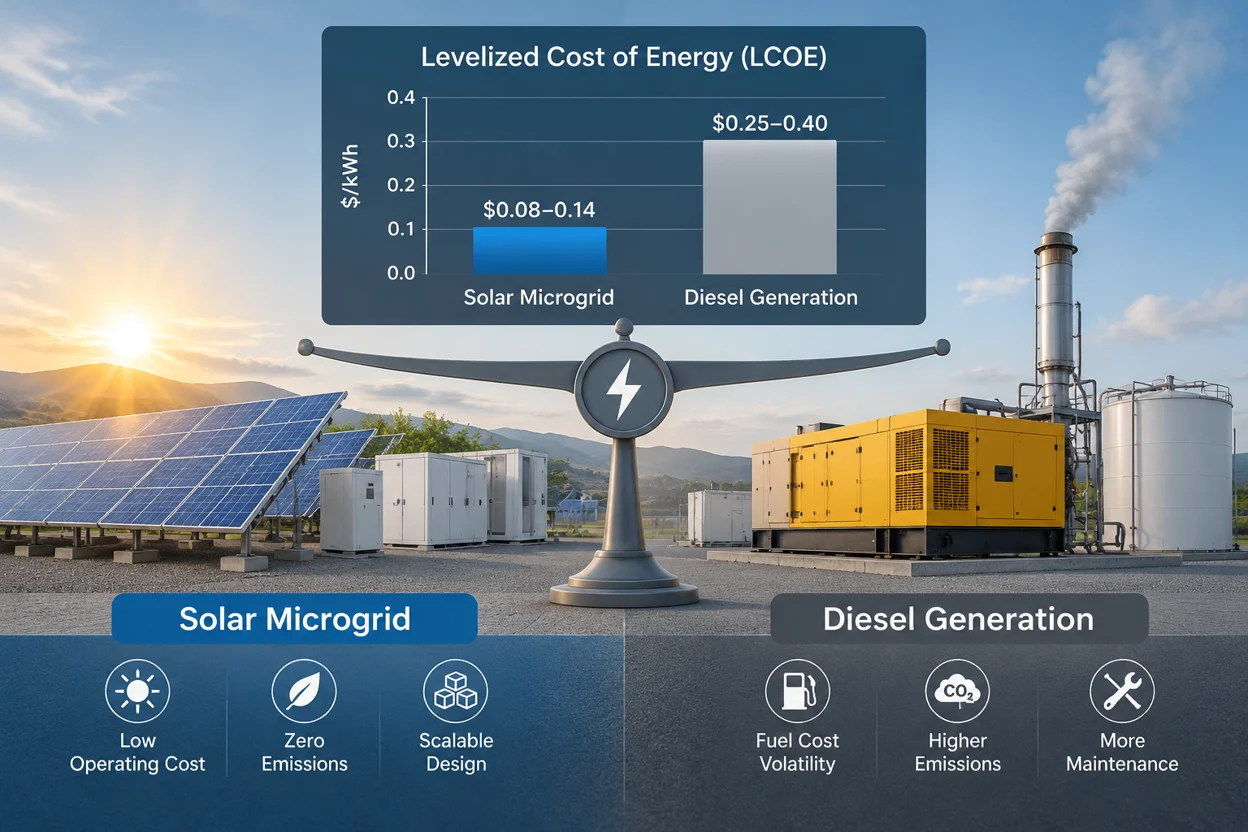
Gas (pipeline natural gas, or on some sites biogas/APG) can lower continuous-run emissions and fuel cost where the pipe is reliable—but pure standby plants still need a clear policy for gas-supply risk. ALEO Power also builds gas generator sets and PV-BESS-diesel/gas hybrid microgrids for campuses that combine renewables with thermal backup.
For a deeper fuel TCO framing, see our note on diesel vs gas operating cost for industrial projects.
Sizing practice that avoids the two common failures
- Undersizing mechanical load — cooling often equals or exceeds IT kW; design for the worst simultaneous IT+cooling case the UPS/BMS will allow on generator.
- Ignoring step loads — chiller and large fan starts need adequate kVA and voltage dip limits; paralleling multiple sets can help large halls.
Walk through industrial generator sizing with your electrical consultant, then lock prime vs standby rating with the OEM. ALEO Power typically quotes against a clarified load list rather than a single “kW for the building” guess.
Factory acceptance, site tests, and maintenance
Backup value only exists if the plant starts. Specify FAT/SAT expectations, monthly no-load or load-bank tests where practical, and an hour-based service plan. Our overview of industrial generator maintenance is a starting checklist for O&M handoff.
How ALEO Power supports data-center projects
- Headquarters in Wuxi, Jiangsu; sales coordination from Guangzhou
- About 10 years delivering industrial power packages; typical production lead time around 30 days (project-dependent)
- Diesel and gas sets, containerized packages, and hybrid microgrid options for campuses that need more than pure standby
- Application references including data-center and mining environments via cases
Share your target IT load, cooling load, redundancy level, fuel preference, and site country with our sales team (alan@aleopower.com / +86-18661056678). We respond with a project-oriented configuration—not a residential portable-generator recommendation.
Related reading: Industrial generator selection guide (18kW–2MW).