Choosing an industrial diesel generator is rarely a catalog click. For plants, data halls, mines, and remote sites, the wrong rating, fuel plan, or runtime assumption shows up as blackouts, failed load tests, or a genset that never reaches nameplate output. This guide walks industrial buyers through how to specify industrial diesel generator sets from 18 kW to 2 MW—what ISO 8528 ratings mean, how kW differs from kVA, when natural gas or hybrid microgrids beat pure diesel, and how Aleo Power typically scopes packages with a standard lead time 30 days for typical builds.
If you already know your load band, start with our diesel generator category and the broader product range. If you are still sizing the system, keep reading—then use the checklist and FAQ at the end before you request a quote via Contact Us.
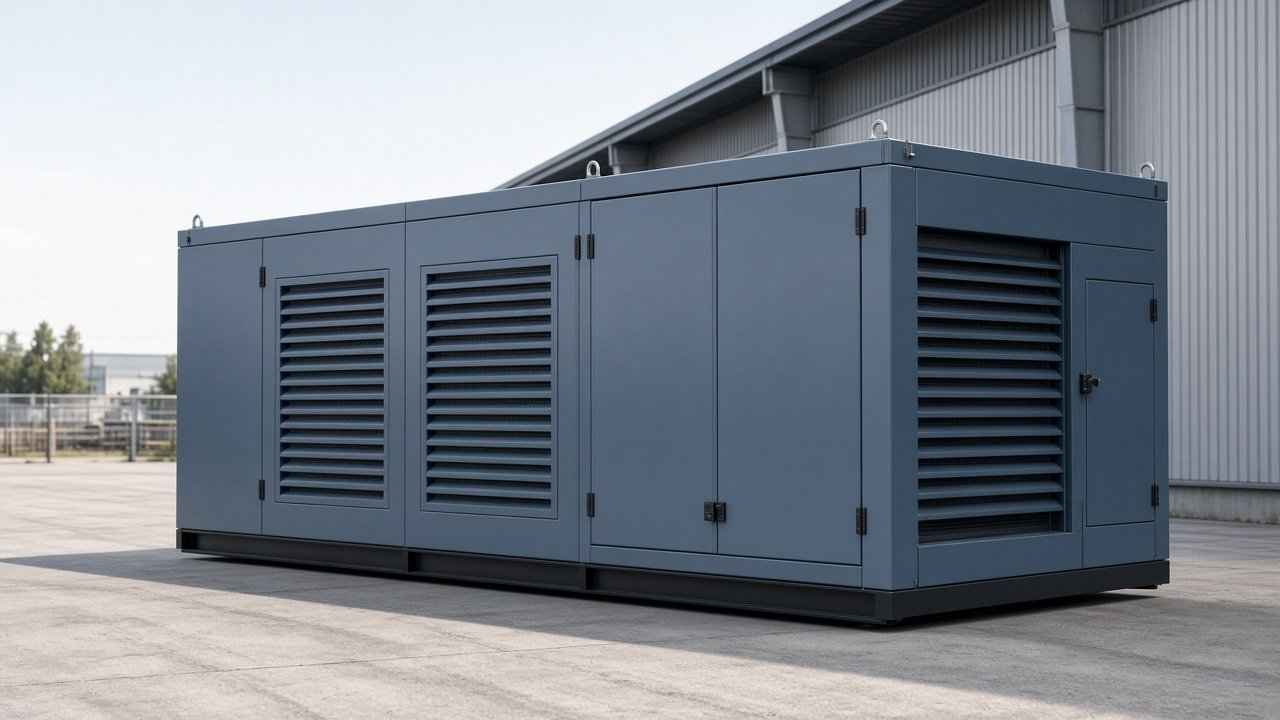
Why industrial diesel generator decisions fail in the field
Most failed specs share the same pattern: the purchase order matched a brochure kW number, not the site’s real duty cycle.
Common failure modes we see across EPC and owner-operator projects:
- Confusing standby nameplate with continuous or prime duty under ISO 8528
- Ignoring power factor, so a “500 kW” set cannot feed a 500 kW inductive load at 0.8 pf
- Undersizing for motor starting or UPS rectifier inrush on data center backup power
- Treating fuel logistics as an afterthought in remote mining or oilfield sites
- Ordering open sets for dusty or coastal sites that needed containerized packages
- Skipping paralleling / load-sharing design when N+1 was required from day one
An industrial genset is a power plant in miniature. Treat it like rotating equipment with fuel, cooling, exhaust, controls, and compliance—not like a consumer standby unit.
Attention hook: what “good enough” power costs when it is not
Picture a mid-size factory with an 800 kVA industrial genset on paper “standby.” Grid quality worsens; the plant runs the set six hours a day for months. Oil analysis drifts, coolant temperatures climb, and a warranty conversation starts because the duty never matched the rating. Or a colo hall specifies kW without documenting UPS crest factor and step-load; the first black-start test fails at 60% of design load.
Those are not exotic edge cases. They are what happens when Attention stops at price per kW. The rest of this article is built so Interest, Desire, Memory, and Action follow in order: understand the problem space, compare real options, remember a reusable framework, then inquire with clean inputs.
Interest: the industrial generator market buyers actually operate in
Industrial buyers usually sit in one of four buckets:
- Facility / critical power — hospitals, data centers, telecom, water treatment needing standby or emergency duty
- Process / continuous power — factories, agri-processing, and sites with weak grids needing prime power
- Resource & remote — mining, oil & gas, construction camps where diesel or gas is the primary source
- EPC / developer — multi-set plants, hybrid microgrids, and phased capacity builds
Across those buckets, the useful search is not “biggest diesel genset.” It is “which industrial generator sets 18kW to 2MW fit this duty, fuel, and site envelope.” Aleo Power focuses on that band: diesel sets, gas sets (natural gas, biogas, CMM, APG, syngas), and hybrid microgrid packages that combine PV, BESS, and gensets when economics allow.
For company context—Wuxi headquarters, Guangzhou sales team, roughly 10 years in industrial generator sets—see About Us. Project patterns (without inventing client names or contract values) live on our Cases page, including data-center-oriented and resource-sector examples.
kW vs kVA (and why power factor is not optional)

Generators are often marketed in kVA; loads are planned in kW.
- kW = real power the load consumes
- kVA = apparent power the alternator must supply
- Rough rule at 0.8 power factor: kW ≈ 0.8 × kVA
If your process load is 400 kW at 0.8 pf, you need about 500 kVA of alternator capacity—not a 400 kVA nameplate. Non-linear UPS and VFD loads can demand extra derating. Always ask the manufacturer how they rate the set for your pf and harmonic profile.
ISO 8528 ratings: prime power vs standby (and related classes)
ISO 8528 is the common language for reciprocating engine driven generating sets. Buyers should pin the rating class in the RFQ, not in a footnote.
At a practical level for industrial generator-set selection:
- Emergency standby (ESP / standby-type duty): limited annual hours; typically for utility outage backup. Not intended as a daily production engine.
- Prime power (PRP): unlimited hours per year with variable load, within the manufacturer’s average load factor rules. Typical for sites that run often on genset power.
- Continuous power (COP): constant load for unlimited hours—stricter than many “prime” marketing claims.
- Limited-time running / related classes: time-bounded duties; read the exact ISO 8528 definition your vendor quotes.
Do not assume “standby kW” equals “prime kW.” Prime ratings are usually lower for the same hardware. If your EPC schedule shows eight-hour daily operation for two years of grid instability, specify prime (or continuous) up front.
We are not quoting a certificate number here on purpose: ratings must come from the factory datasheet for the exact engine–alternator pairing you buy. Ask for the ISO 8528 rating table on that serial configuration.
Desire: comparing fuels, power bands, and package types
Industrial diesel generator vs natural gas generator vs hybrid

| Option | Best fit | Strengths | Limits |
|---|---|---|---|
| Industrial diesel generator | Standby, prime on sites with reliable diesel logistics | High energy density fuel, fast start, mature service networks | Fuel cost volatility, emissions permitting, fuel polishing/storage |
| Natural gas generator | Continuous or prime where pipeline or well gas is stable | Often lower fuel cost, cleaner exhaust profile vs diesel | Gas quality / pressure constraints; derate on weak gas; slower cold start vs diesel in some packages |
| Other gas (biogas, CMM, APG, syngas) | Resource or waste-to-power projects | Turns on-site gas into kWh | Gas cleanup, methane number, and engine mapping are project-specific |
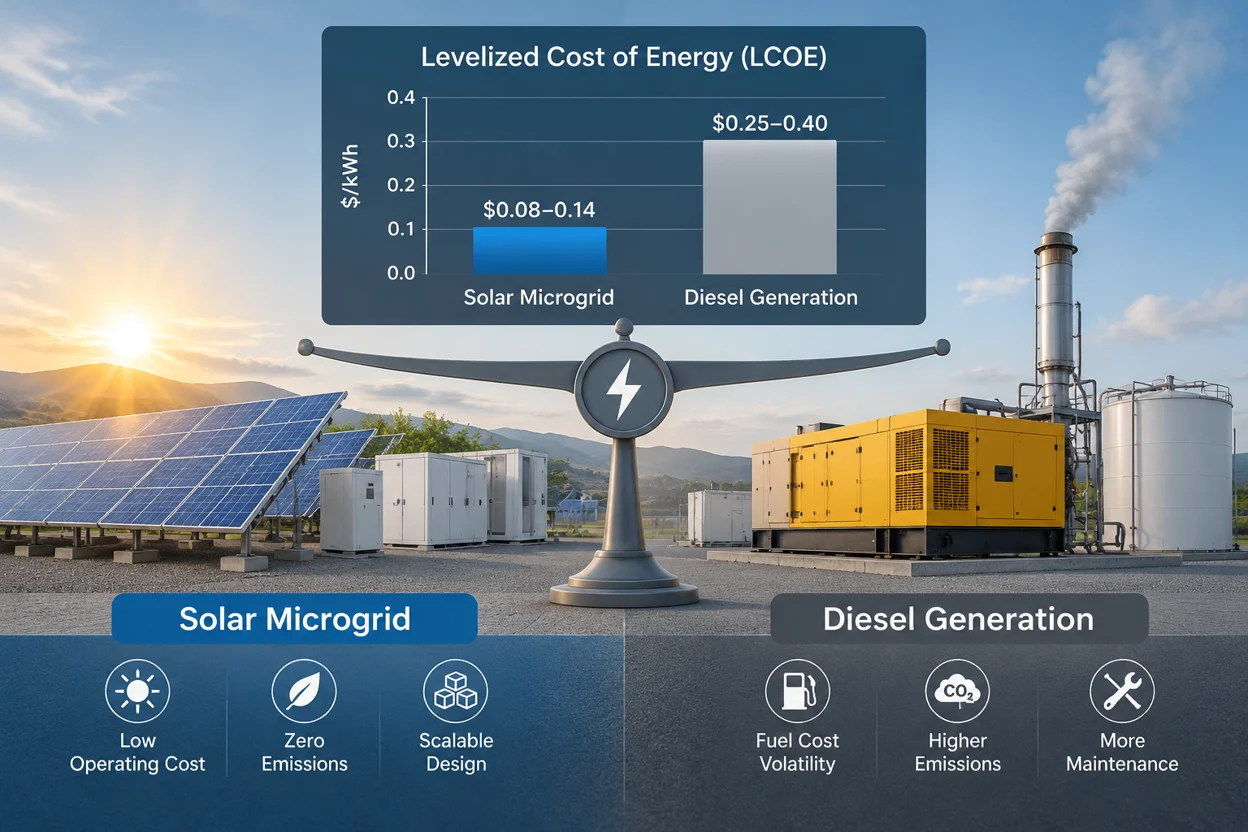
| Hybrid microgrid (PV + BESS + genset) | Camps, islands, high diesel price regions | Cuts diesel run hours, improves fuel spend | Higher controls complexity; needs competent EPC integration |
Diesel remains the default industrial diesel generator choice for black-start critical power and sites without gas. Gas wins when fuel is stranded or priced favorably. Hybrids win when diesel liters dominate OPEX and solar resource is decent—see our microgrid category.
For a deeper backup-power angle, read Data Center Backup Power. For a broader diesel-vs-gas sizing walkthrough, use the Industrial Generator Selection Guide.
Power bands inside 18 kW–2 MW
Think in bands, not single SKUs:
| Band | Typical uses | Spec focus |
|---|---|---|
| 18–100 kW | Small plants, telecom, light commercial backup | Compact footprint, ATS integration, noise |
| 100–500 kW | Factories, mid-size buildings, construction | Motor starting, optional synchronization |
| 500 kW–1 MW | Large facilities, data rooms, process lines | Step load, container options, fuel autonomy |
| 1–2 MW | Campus / industrial parks, multi-set plants | Paralleling, N+1, switchgear & grounding design |
Aleo Power’s industrial generator sets sit across this 18 kW to 2 MW window. Exact model availability changes with engine platforms; treat RFQs as engineered packages, not off-the-shelf appliances.
Specs buyers should demand in every diesel industrial genset datasheet
Use this as a minimum table in your inquiry (fill with site values; vendors complete equipment columns):
| Spec item | Why it matters | What to write in the RFQ |
|---|---|---|
| Rating class (ISO 8528) | Prevents duty mismatch | ESP / PRP / COP + expected annual hours |
| kW / kVA @ stated pf | Aligns load and alternator | e.g. XXX kW @ 0.8 pf, 50/60 Hz, XXX V |
| Step load / block load | Avoids voltage/frequency collapse | % load acceptance required |
| Fuel type & autonomy | Runtime without refill | Diesel hours at XX% load; tank size |
| Cooling & ambient | Derate in heat/altitude | Max °C, altitude m, enclosure type |
| Emissions / local rules | Permit risk | Target standard or local limit (site-defined) |
| Control & paralleling | Multi-set growth | Single set / island / grid-parallel intent |
| Package | Site logistics | Open / silent / containerized / trailer |
| Lead time | Schedule risk | Need-by date vs standard ~30-day build |
Standard manufacturing lead time at Aleo Power is about 30 days for typical configurations—complex gas cleanup, special switchgear, or custom containers can extend that. Say so early if your EPC critical path is tight.
Application scenarios that change the bill of materials
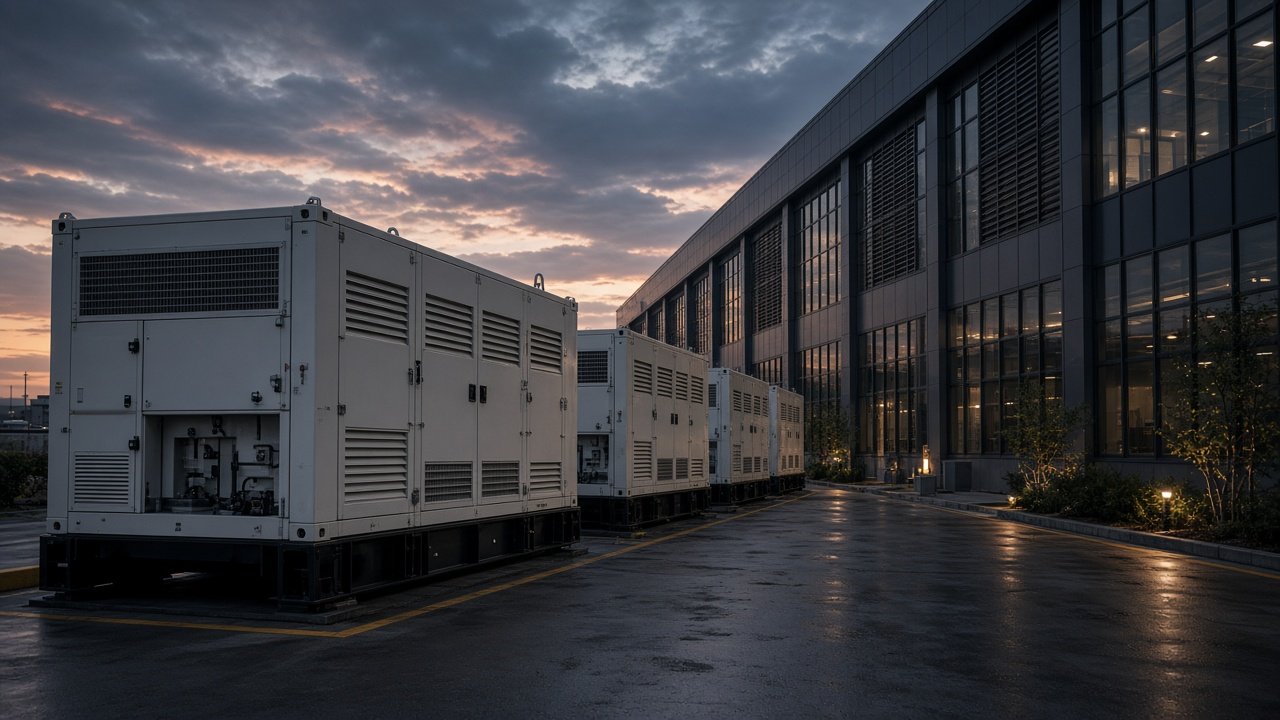
Data center / IT backup. Prioritize black-start reliability, UPS interaction, fuel autonomy, and tested step load. See our data-center article linked above and related Cases.
Manufacturing prime power. Prioritize prime rating, motor starting, harmonic environment from VFDs, and maintenance access for high run hours.
Mining / oilfield. Prioritize fuel logistics, dust filtration, containerization, and—where gas is available—evaluating gas or dual-path designs instead of hauling diesel forever.
Municipal / water / telecom. Prioritize enclosure noise, ATS behavior, and remote monitoring.
In each case, the best industrial generator set is the one whose duty class, cooling, and controls match the site—not the one with the highest brochure kW.
Maintenance and lifecycle realities (not brochure hours)
An industrial genset that looks perfect on a datasheet still fails if service intervals collide with production. Plan for:
- Oil, filter, and coolant intervals at the actual load factor—not at idle demo hours
- Fuel quality testing; water and microbes in diesel storage are a leading “mystery” fault
- Battery and charger health on standby sets that sit cold for weeks
- Exhaust aftertreatment constraints if your site falls under local emissions rules
- Load bank testing schedule so standby units prove block-load capability before a real outage
Gas engines shift the maintenance mix toward spark plugs, gas train integrity, and fuel quality (siloxanes on biogas, liquids in APG). Hybrid microgrids add BESS cycle management and inverter coordination. Budget the operating model in the RFQ, or OPEX surprises erase CAPEX wins.
Paralleling, N+1, and growth paths
Many 500 kW–2 MW projects should evaluate multiple synchronized industrial generator sets instead of one large machine:
- N+1 redundancy for critical power without a single point of failure
- Better part-load fuel burn when demand varies by shift
- Staged CAPEX if the plant expands in phases
- Easier transport and crane limits on constrained sites
Paralleling needs competent controls, protection settings, and commissioning. If your team lacks island-mode experience, say so in the RFQ so the package includes engineering support—not only iron.
What Aleo Power brings (and what we will not overclaim)
Aleo Power manufactures and engineers industrial generator sets in the 18 kW–2 MW class, with diesel and gas lines plus hybrid microgrid packages. Headquarters are in Wuxi, Jiangsu; the sales team operates from Guangzhou. We have roughly a decade of project work in industrial power—enough to know where RFQs go wrong, not enough to pretend every site is identical.
We will not invent customer logos, megawatt awards, or fake certificate IDs in this article. For proof points, review published Cases and ask for datasheets and FAT plans on the exact configuration under quote. Experience shows up as clear rating language, realistic derates, and a bill of materials that survives commissioning—not as adjectives.
Memory: a reusable selection framework for industrial diesel generator projects
Memorize this five-block frame (AIDMA “Memory” layer). Paste it into every internal design review.
Block A — Duty
- Utility backup only, or production prime?
- Annual hours estimate?
- ISO 8528 class required?
Block B — Electrical
- Running kW, pf, voltage, frequency
- Largest motor / UPS step
- Single set or paralleling / N+1?
Block C — Fuel & site
- Diesel, pipeline gas, well gas, biogas, or hybrid?
- Ambient, altitude, dust, noise limits
- Autonomy hours and fuel polishing needs
Block D — Package & controls
- Open, canopy, container, trailer
- ATS, synchronization, SCADA / remote
- Who owns EPC integration?
Block E — Commercial
- Need-by date vs ~30-day standard lead time
- Spare parts plan and commissioning scope
- Documentation: datasheet, wiring, FAT, manuals
If any block is empty, you are not ready to compare vendor prices.
Buyer checklist (copy/paste)
- Load list with running and starting kW
- Power factor and harmonic notes
- ISO 8528 rating class selected
- Fuel plan and autonomy hours
- Ambient / altitude derate considered
- Enclosure and noise target set
- Single vs multi-set topology decided
- Lead time vs project schedule checked
- Commissioning and spare strategy named
- Quote package requested from Contact Us
FAQ: diesel genset package questions buyers ask first
1. What size industrial diesel generator do I need?
Start from measured or calculated running kW, add starting/step margins, convert with power factor to kVA, then pick an ISO 8528 rating class. Do not size from building square meters alone.
2. Is prime power the same as standby?
No. Prime (PRP) allows extensive yearly operation with variable load under defined average load factors. Standby / emergency-type ratings assume limited hours. Mismatch is a top warranty and reliability risk.
3. Why do vendors list both kW and kVA?
Because real power (kW) and apparent power (kVA) diverge whenever power factor is below 1.0. Industrial loads often sit near 0.8 pf unless corrected.
4. When should I choose a natural gas generator instead of diesel?
When gas supply is reliable and priced favorably, or when on-site gas (biogas, CMM, APG) turns a waste stream into power. Diesel still wins for many standby and logistics-constrained black-start roles.
5. Can one 2 MW set replace several smaller industrial generator sets?
Sometimes for simple loads. Multi-set paralleling often wins for N+1 redundancy, partial-load efficiency, and staged CAPEX. Ask for a topology study, not only a bigger engine.
6. What lead time should EPC teams plan for?
Aleo Power’s standard lead time is about 30 days for typical industrial generator sets in the 18 kW–2 MW range. Custom gas conditioning, special containers, or unusual voltages can take longer—confirm in the quotation.
7. Do you only sell diesel?
No. Diesel is core, but the catalog also includes gas generator platforms and hybrid microgrid systems. Browse Products and Microgrid.
8. How do I start a serious RFQ with Aleo Power?
Send the Block A–E framework above (even partially filled) to the sales team via Contact Us. Headquarters engineering support sits in Wuxi; sales coordination is available from Guangzhou. Email and phone are listed on that page.

Action: request a configuration that matches duty—not a brochure
If your project needs an industrial genset—or a gas / hybrid alternative—inside 18 kW to 2 MW, bring a load list and duty class, not only a target price. Aleo Power will map rating, fuel, and package options, then quote against a realistic schedule (standard builds often near 30 days).
Next steps:
- Skim Products and Diesel Generator for the right band
- Cross-check patterns on Cases
- Use the selection guide if diesel vs gas is still open
- Submit the checklist via Contact Us
Home base for the brand: aleopower.com. Company profile: About Us.
An industrial diesel generator earns its keep only when rating, fuel, and controls match the site. Spec that clearly, and commissioning gets quieter—exactly what EPC calendars need.