Industrial power systems are becoming more complex as businesses integrate renewable generation, energy storage, conventional generators, and advanced electrical loads into their operations. Traditional power management approaches were primarily designed for centralised electricity networks with predictable generation and consumption patterns. Modern energy infrastructure requires greater operational flexibility to manage changing power flows, distributed resources, and increasingly demanding reliability requirements.
Microgrid control systems address these challenges by continuously coordinating generation sources, electrical loads, energy storage, and utility connections. Unlike conventional power management systems that often rely on centralised control and fixed operating strategies, advanced microgrid controllers use real-time monitoring and automated decision-making to respond to changing energy conditions. These capabilities help facilities maintain stable operation while improving the utilisation of available power resources.
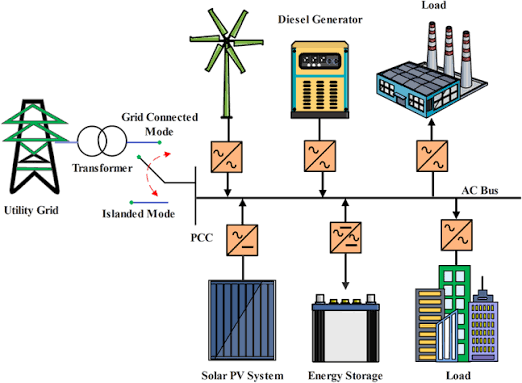
The differences between these systems become particularly important when businesses consider energy resilience and long-term infrastructure investments. The integration of Battery Energy Storage Systems (BESS), renewable resources, and distributed generation requires control technologies capable of balancing multiple energy sources. Microgrid controllers can also manage transitions between grid-connected and islanded operation, providing greater flexibility during utility disturbances and power outages.
Understanding how microgrid control differs from traditional power management helps organisations select technologies that match their operational requirements and future energy objectives. This article compares their control architectures, energy resource integration, automation capabilities, grid dependence, reliability, costs, scalability, and industrial applications to explain their role in building a future-ready energy infrastructure.
How Microgrid and Traditional Power Control Differ
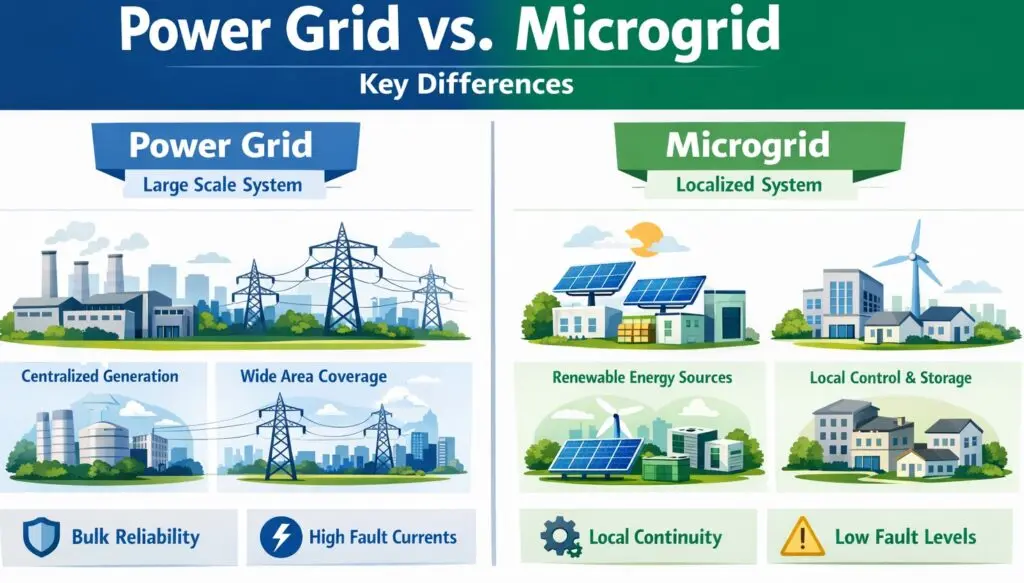
The primary difference between traditional power management and microgrid control systems lies in how each system responds to changing energy conditions. Traditional systems generally manage electricity flowing from centralised generation facilities through transmission and distribution networks to end users. Their control strategies focus on maintaining reliable power delivery across large networks with relatively limited participation from local energy resources.
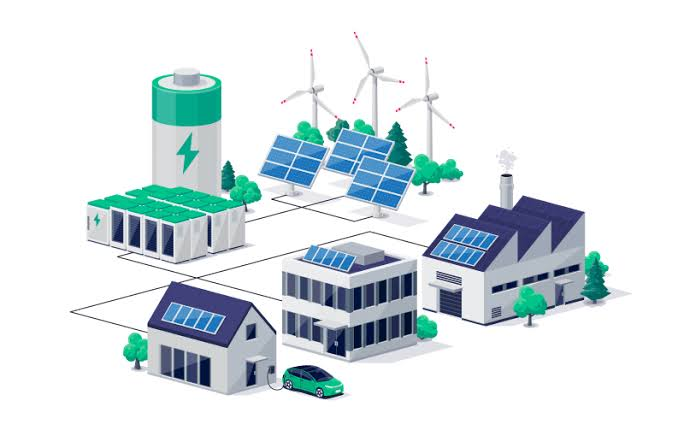
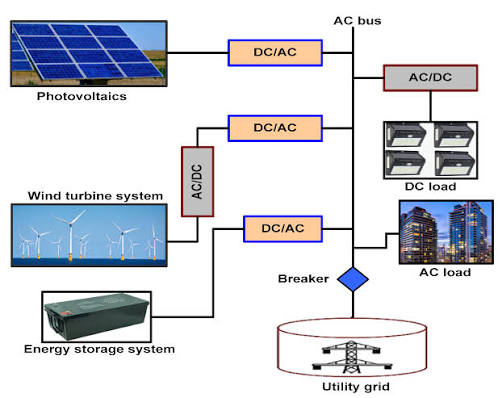
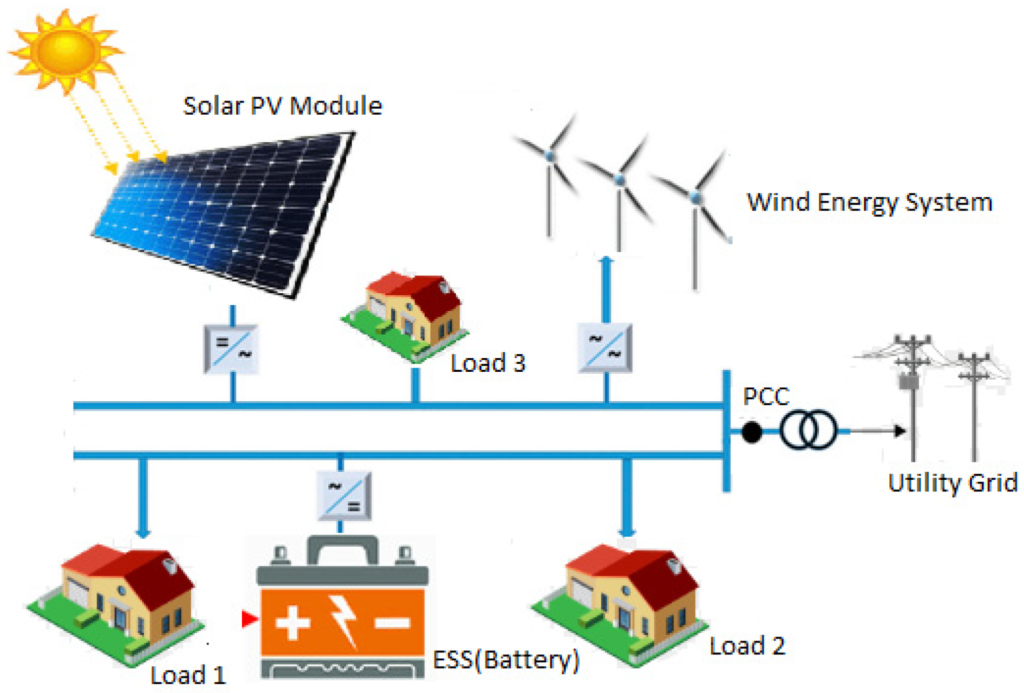
Microgrid control takes a more flexible approach by coordinating multiple power sources within a defined electrical network. Generators, renewable resources, Battery Energy Storage Systems (BESS), and utility connections can be managed according to real-time operating requirements. This multi-resource coordination allows facilities to adjust power generation and consumption without relying entirely on external utility networks.
Another major difference is operational responsiveness. Traditional systems often depend on centralised dispatch strategies and operator intervention to manage significant changes in generation or demand. Advanced microgrid controllers continuously monitor electrical conditions and can automatically adjust generator output, battery operation, and controllable loads. This automated response improves system stability during rapid changes in renewable generation, electricity demand, or utility availability.
Microgrids also provide greater control over local energy priorities. Industrial facilities can optimise resources according to electricity costs, critical load requirements, sustainability objectives, and equipment availability. Traditional power management systems typically offer less flexibility at the facility level because their primary objective is coordinating electricity delivery across the broader utility network.
These differences make microgrid control particularly valuable for organisations seeking greater energy independence, operational resilience, and a smart power management framework.
Control Architecture and Decision-Making
The control architecture determines how an energy system collects data, makes operating decisions, and manages connected power resources. Traditional power management systems generally rely on centralised control, where utility control centres coordinate electricity generation and distribution across large networks. This structure is effective for conventional power delivery but offers limited control over individual facilities and local energy resources.
Microgrids use more flexible control architectures. Depending on system requirements, they may use centralised, decentralised, distributed, or hierarchical control strategies. Local controllers can manage generators, batteries, and renewable resources, while higher-level controllers coordinate system-wide operation and interaction with the utility grid.
Hierarchical control further divides responsibilities into primary, secondary, and tertiary levels. These layers manage immediate electrical stability, restore operating conditions, and optimise long-term energy use. This combination of local intelligence and coordinated control allows microgrids to respond efficiently to changing conditions and supports an intelligent energy ecosystem.
Energy Resource Integration
Traditional power management systems were primarily designed to manage electricity supplied by large centralised power plants and utility networks. Although renewable energy can be added to these systems, integrating variable generation and energy storage often requires additional infrastructure and grid coordination.
In comparison, microgrids are designed to coordinate multiple local energy resources within one system. Microgrid control systems can manage solar generation, wind energy, diesel or natural gas generators, and Battery Energy Storage Systems (BESS) according to current demand and resource availability.
Controllers determine when generators should operate, batteries should charge or discharge, and renewable energy should supply local loads. This resource optimisation can reduce unnecessary fuel consumption and improve the use of available generation capacity.
The ability to integrate diverse power resources also gives businesses greater flexibility when expanding their energy infrastructure or adopting cleaner technologies, creating a future-ready energy infrastructure.
Real-Time Monitoring and Automation
Traditional power management systems typically rely on centralised monitoring, scheduled operating strategies, and operator intervention to manage changes in electricity demand or equipment performance. While modern utility systems include advanced automation technologies, individual facilities may have limited control over how quickly their local power resources respond to changing conditions.
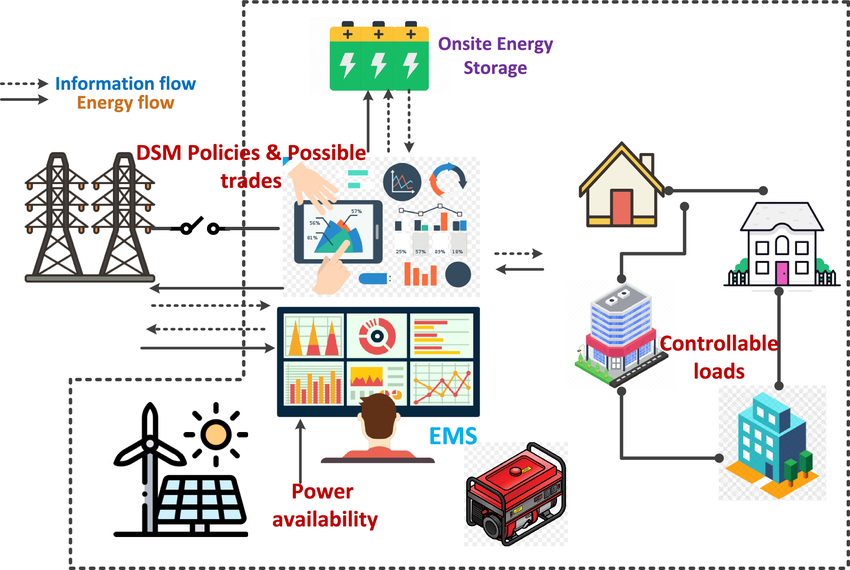
In comparison, microgrid control systems continuously collect data from generators, energy storage systems, renewable resources, and electrical loads. This real-time monitoring allows controllers to detect changes in energy demand, equipment availability, and grid conditions as they occur.
Automated control strategies can adjust generator output, charge or discharge batteries, and manage controllable loads without requiring constant operator intervention. Advanced Energy Management Systems (EMS) can also use forecasts and historical data to improve operating decisions.
By combining continuous monitoring with automated energy management, microgrids can respond more efficiently to disturbances, reduce unnecessary energy consumption, and maintain stable operation across changing conditions. These capabilities support a high-performance energy strategy.
Grid Dependence and Operating Flexibility
Traditional power management systems generally depend on the centralised utility grid for continuous electricity supply. Facilities may use backup generators during outages, but these systems often operate separately from normal energy management processes. This dependence can limit operating flexibility when grid disruptions or sudden changes in electricity costs occur.
Microgrids are designed to operate in both grid-connected and islanded modes. During normal conditions, they can exchange electricity with the utility network while coordinating local generators, renewable resources, and energy storage systems. If the utility supply becomes unavailable, controllers can disconnect the microgrid and maintain power for critical loads using local energy resources.
The ability to switch between operating modes gives businesses greater control over energy availability and system performance. By managing grid interaction and local generation as part of one coordinated system, microgrids support stronger energy resilience and a reliable power ecosystem.
Microgrid Control Systems Vs Traditional Power Management Systems: Key Differences
Although both technologies manage electrical power, their capabilities differ significantly in terms of resource coordination, automation, and operational independence.
| Feature | Microgrid Control Systems | Traditional Power Management Systems |
| Control Structure | Centralised, decentralised, distributed, or hierarchical | Primarily centralized |
| Energy Resources | Generators, renewables, storage, and utility power | Mainly centralised generation and utility supply |
| Monitoring | Continuous real-time monitoring | Centralised or scheduled monitoring |
| Automation | Advanced automated resource coordination | Greater dependence on predefined strategies and operator control |
| Grid Operation | Grid-connected and islanded operation | Primarily dependent on the utility grid |
| Scalability | Flexible integration of additional energy resources | Expansion may require major infrastructure upgrades |
| Energy Optimization | Coordinates generation, storage, loads, and grid exchange | Focuses mainly on electricity delivery and network operation |
| Resilience | Supports local power during utility outages | Usually depends on separate backup power systems |
These differences make modern microgrid technologies particularly valuable for industrial facilities seeking greater operational control, scalability, and a smart power management framework.
Reliability and Power Resilience
Reliable electricity is essential for industrial facilities, data centres, healthcare campuses, and other operations where outages can cause financial losses or safety risks. Traditional power management systems depend primarily on utility networks, while separate backup power systems are activated when the main supply fails. This approach provides emergency power but may offer limited coordination between normal and backup energy resources.
Microgrids integrate local generators, energy storage, and renewable resources into a coordinated network. During a utility disturbance, controllers can identify abnormal conditions, disconnect from the main grid, and prioritise critical electrical loads. This automated load management helps maintain essential operations while available generation resources are balanced according to system demand.
Advanced control also improves resilience by monitoring equipment performance and responding quickly to changing conditions. By coordinating multiple energy resources instead of depending on a single supply source, microgrids provide a more flexible approach to maintaining a reliable industrial energy solution.
Cost and Energy Efficiency
Traditional power management systems focus primarily on delivering electricity reliably across centralised networks. Individual facilities may have limited opportunities to control energy costs beyond adjusting consumption patterns or using standalone generators during peak demand periods. Rising utility prices and demand charges can therefore increase operating expenses for energy-intensive businesses.
Microgrids provide additional opportunities for cost management by coordinating local generation, batteries, renewable resources, and utility electricity. Microgrid control systems can schedule available resources according to electricity prices, facility demand, and operating priorities. Batteries may store energy during lower-cost periods and discharge during peak demand, while generators can operate when local production is economically beneficial.
Better coordination also reduces unnecessary generator operation and improves the utilisation of renewable energy. Through energy optimisation, businesses can improve efficiency while maintaining reliable power for critical operations, supporting a cost-efficient energy solution.
Scalability and Industrial Applications
Traditional power infrastructure can be difficult and expensive to expand because increasing capacity may require major upgrades to electrical distribution equipment and utility connections. This infrastructure limitation can create challenges for industrial facilities experiencing rapid growth or increasing electricity demand.
Microgrids provide greater scalability because additional generators, renewable energy resources, and Battery Energy Storage Systems (BESS) can be integrated as operational requirements evolve. Advanced controllers coordinate these new resources with existing equipment, allowing businesses to expand capacity without completely redesigning the energy system.
This flexibility makes microgrids suitable for manufacturing plants, data centres, mining operations, healthcare facilities, commercial campuses, and remote industrial sites. Each application can configure generation and storage resources according to its specific reliability and energy requirements.
By supporting phased expansion and diverse energy technologies, microgrids allow organisations to adapt their power infrastructure to future growth, changing sustainability objectives, and new operational demands. This flexibility contributes to a future-ready energy infrastructure.
When Should Businesses Choose Microgrid Control Systems?
Businesses should consider microgrid control systems when reliable power, operational flexibility, and greater control over energy resources are strategic priorities. Facilities experiencing frequent utility disruptions or high demand charges may benefit from coordinating local generators, energy storage, and renewable resources through one control platform.
Microgrid technologies are also suitable for organisations planning to expand their operations or integrate additional distributed energy resources. Advanced controllers allow businesses to manage new generations and storage capacity while maintaining system stability and efficient operation.
Industries with critical loads, including manufacturing plants, data centres, healthcare facilities, and remote operations, may benefit from the ability to maintain local power during utility outages. The right solution depends on facility size, energy demand, existing infrastructure, and long-term operational objectives.
Evaluating these factors helps businesses determine whether microgrid control provides the reliability, scalability, and energy management capabilities required for a reliable industrial energy solution.
The Future of Industrial Power Management
Industrial power management is moving toward more automated, decentralised, and data-driven energy systems. As businesses adopt renewable generation, battery storage, and distributed energy resources, advanced controllers will become increasingly important for coordinating complex power networks.
Future microgrid technologies are expected to use predictive analytics and improved forecasting to anticipate electricity demand, renewable generation, and equipment performance. These capabilities can help operators make faster decisions and optimise available energy resources before operating conditions change.
Greater automation will also support more efficient interaction between industrial facilities and utility networks. Microgrids may participate more actively in demand response programs, energy markets, and grid support services while maintaining reliable local operations.
As energy infrastructure continues to evolve, intelligent control technologies will help businesses improve efficiency, resilience, and scalability. Investing in adaptable power management systems can support long-term growth and the development of an intelligent energy ecosystem.
Build Smarter Power Infrastructure with ALEO Microgrid Solutions
Choosing between traditional power management and microgrid control systems depends on a facility’s energy requirements, reliability priorities, and plans for future expansion. While traditional systems remain important for centralised electricity delivery, microgrid technologies provide greater flexibility for coordinating distributed resources, improving resilience, and managing complex industrial energy networks.
ALEO provides advanced microgrid and industrial power solutions designed to help businesses develop reliable and scalable energy infrastructure. By supporting the integration of generators, energy storage, renewable resources, and intelligent control technologies, ALEO helps industrial facilities improve power reliability and respond to evolving operational requirements.
With UL certification from the USA, direct shipment from the United States, professional on-site installation and debugging support, and a 1-year warranty, ALEO provides dependable solutions backed by technical expertise and customer support.
Visit our website and connect with us to explore microgrid and industrial power solutions designed to strengthen your operations and support a future-ready energy infrastructure.