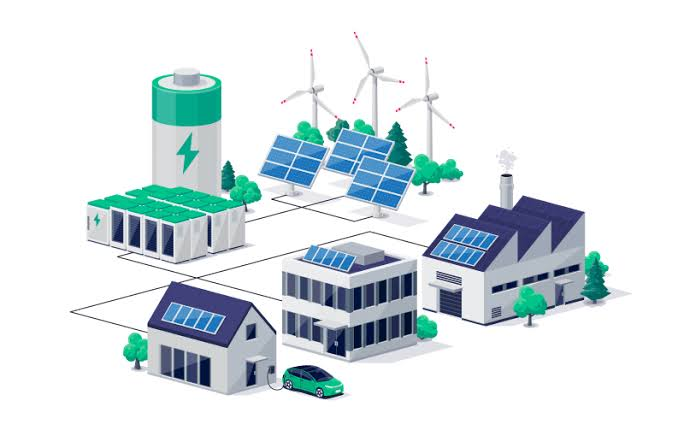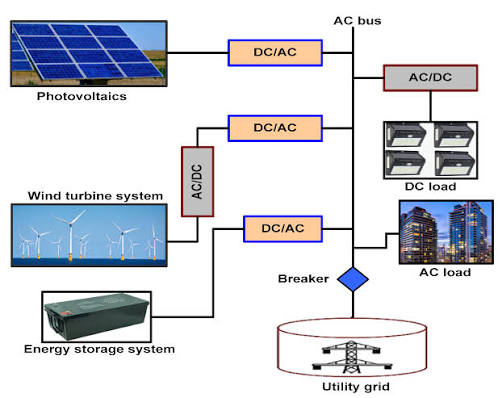
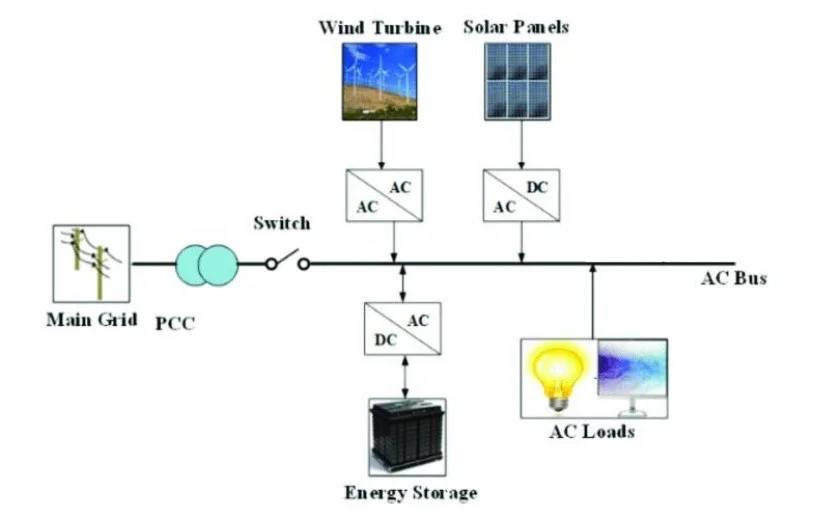
Modern microgrids depend on advanced control technologies to coordinate multiple power sources, maintain system stability, and respond quickly to changing energy conditions. As industrial facilities integrate renewable generation, energy storage, utility power, and conventional generators, real-time coordination becomes essential for maintaining a reliable electricity supply. Microgrid controllers provide the intelligence required to manage these resources as part of a unified energy system.
The growing use of solar power, wind generation, and Battery Energy Storage Systems (BESS) has made microgrid operation increasingly complex. Energy production can change rapidly, while industrial loads may fluctuate throughout the day. Effective control strategies help balance generation and consumption, regulate voltage and frequency, and determine when different energy resources should operate. These capabilities allow businesses to improve energy efficiency without compromising operational reliability.
Different microgrid applications require different control architectures and operating modes. Some systems rely on centralized decision-making, while others use decentralized or distributed control strategies. Hierarchical control structures further divide responsibilities into primary, secondary, and tertiary levels. Technologies such as Energy Management Systems (EMS) and STATCOM devices also support power optimization, voltage regulation, and improved power quality across modern microgrid networks.
Understanding how microgrid controllers operate is therefore important for organizations planning resilient and scalable energy infrastructure. This article explains microgrid control, major control modes, centralized and distributed architectures, group control, DC microgrid working modes, STATCOM control strategies, and the technologies shaping the future of intelligent energy management.
What Is Microgrid Control?
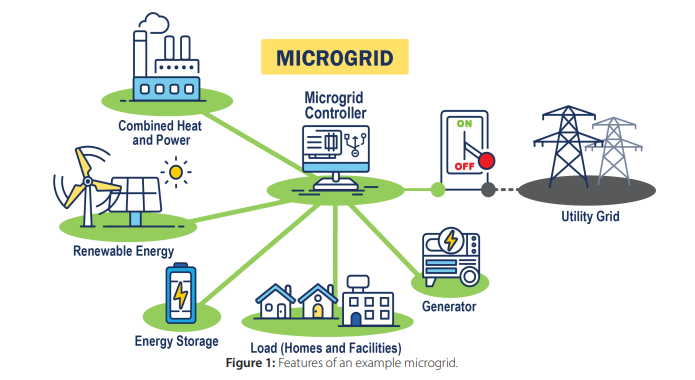
Microgrid control refers to the coordinated management of generation sources, energy storage systems, electrical loads, and grid connections within a microgrid. The main objective is to maintain a continuous balance between electricity production and consumption while ensuring stable voltage, frequency, and power quality. Modern control systems continuously collect operating data and adjust connected energy resources according to changing system conditions.
A microgrid controller acts as the central intelligence or coordinating layer of the energy network. It receives information from generators, renewable energy systems, batteries, protection devices, and electrical loads. Based on predefined operating strategies and real-time conditions, the controller determines how much power each resource should produce, when batteries should charge or discharge, and whether the system should import or export electricity through the utility connection.
Effective microgrid control is particularly important during disturbances or changes in operating conditions. If the utility grid fails, the control system must coordinate the transition to islanded operation while maintaining power for critical loads. When the grid service returns, synchronization and reconnection must also be carefully managed to avoid voltage or frequency disturbances.
Advanced controllers can also support economic optimization by prioritizing lower-cost energy resources, reducing peak demand, and improving the utilization of renewable generation. By combining automated decision-making with continuous monitoring, microgrid control improves system stability, operational efficiency, and long-term energy resilience. These capabilities make advanced control technologies an essential part of a smart power management framework.
What Are the Main Control Modes of Microgrids?
Microgrids require multiple levels of control because no single control strategy can manage every electrical and operational requirement effectively. A well-designed control architecture divides responsibilities across primary, secondary, and tertiary levels. Together, these layers allow microgrid controllers to respond quickly to disturbances, restore system conditions, and coordinate energy exchange with the utility grid.
Primary Control
Primary control is the fastest control layer and responds immediately to changes in electrical conditions. Its main responsibility is maintaining voltage and frequency stability after sudden load changes, generation fluctuations, or grid disturbances. This level usually operates locally at individual generators, inverters, and energy storage units without depending heavily on external communication networks.
Droop control is commonly used at this level to enable multiple distributed energy resources to share active and reactive power. Since primary control reacts within milliseconds or seconds, it helps prevent instability before higher control layers can respond. However, its actions may leave small voltage or frequency deviations that must later be corrected.
Secondary Control
Secondary control operates after the primary response has stabilized the system. Its main function is to restore voltage and frequency to their nominal operating values while improving coordination among connected energy resources.
This layer may use centralized, decentralized, or distributed communication architectures. Secondary control can also improve power-sharing accuracy and coordinate Battery Energy Storage Systems (BESS) with generators and renewable sources. By correcting deviations left by the primary control, it supports stable operation during both grid-connected and islanded conditions.
Tertiary Control
Tertiary control operates at the highest level of the control hierarchy and focuses on energy optimization and interaction with the external utility network. Unlike primary and secondary control, which primarily address electrical stability, tertiary control considers economic dispatch, electricity prices, fuel consumption, and long-term energy objectives.
Through coordination with Energy Management Systems (EMS), tertiary control determines when the microgrid should import electricity, export excess generation, charge energy storage systems, or operate available generators. Together, these three control levels create a coordinated intelligent energy ecosystem.
Centralized, Decentralized, and Distributed Control
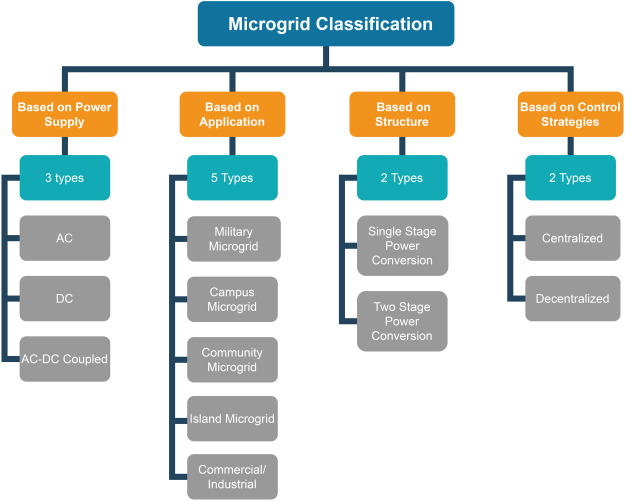
Beyond hierarchical control levels, microgrids can also be classified according to how control decisions are made and communicated across the system. The selected architecture affects system scalability, communication requirements, response speed, and the coordination of distributed energy resources. Understanding these approaches helps businesses select a control structure that matches their operational complexity and reliability requirements.
Centralized Control
In centralized control, a main controller collects operating data from generators, batteries, renewable resources, and electrical loads. It analyzes system conditions and sends commands to individual components based on overall energy objectives.
This architecture provides strong system-wide coordination because decisions are made using information from the entire microgrid. However, centralized systems depend heavily on reliable communication infrastructure and the availability of the central controller. Communication failures or controller problems can affect the performance of the complete network.
Decentralized Control
Decentralized control allows individual energy resources to make decisions using local measurements and predefined operating rules. Generators, inverters, and storage systems can respond independently to changes in voltage, frequency, or power demand.
The primary advantage is improved local autonomy, as the system does not rely on continuous communication with a central controller. However, limited information exchange can make system-wide optimization and accurate power sharing more challenging in complex microgrid applications.
Distributed Control
Distributed control combines local decision-making with communication between neighboring controllers. Individual resources exchange selected operating information and coordinate their actions without depending entirely on one central control unit.
This approach provides greater system scalability and flexibility as new energy resources are added. Distributed architectures can also improve fault tolerance because the failure of one controller does not necessarily interrupt the entire microgrid. For large industrial applications, this balance between local intelligence and coordinated operation supports a reliable distributed power network.
What is the Control and Operation of a microgrid?
The control and operation of a microgrid involve continuously coordinating power generation, energy storage, electrical loads, and the connection with the main utility grid. The objective is to maintain a stable electricity supply while optimizing available energy resources. Advanced operational coordination allows the system to respond automatically to changing demand, renewable energy fluctuations, equipment conditions, and disturbances in the external grid.
Grid-Connected Operation
During grid-connected operation, the microgrid remains electrically connected to the utility network. The utility grid helps maintain voltage and frequency, while local generators, renewable resources, and energy storage systems operate according to economic and operational objectives.
In this mode, power flow management is particularly important. The control system determines whether electricity should be generated locally, imported from the utility, stored in batteries, or exported when excess generation is available. Microgrid controllers may also schedule generators during peak demand periods to reduce electricity costs and improve overall energy efficiency.
Islanded Operation
Islanded operation occurs when the microgrid disconnects from the utility network and supplies its connected loads independently. This may happen because of grid outages, planned maintenance, severe weather events, or other external disturbances.
Without support from the main grid, maintaining voltage and frequency stability becomes the responsibility of local generators, inverters, and energy storage systems. Controllers must balance electricity production and consumption continuously while prioritizing critical loads when generation capacity is limited.
Transition Between Operating Modes
One of the most demanding aspects of microgrid operation is switching between grid-connected and islanded conditions. The controller must detect grid disturbances, disconnect safely, stabilize local resources, and maintain electricity supply with minimal disruption.
When utility service returns, the microgrid must achieve safe synchronization before reconnecting to the external network. Effective management of these operating modes allows modern microgrids to improve resilience, protect critical operations, and maintain a reliable power ecosystem.
What Is Group Control in Microgrids?
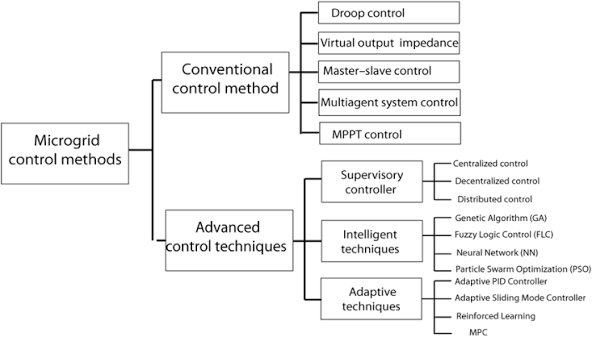
Group control in microgrids refers to the coordinated management of multiple distributed energy resources so they operate as a unified power network. Instead of controlling generators, batteries, and renewable resources independently, the control system coordinates their output according to system demand, equipment availability, and operating priorities. This coordinated resource management is especially important in large microgrids where several generation units must operate simultaneously.
Coordinating Distributed Energy Resources
A microgrid may include solar arrays, wind turbines, industrial generators, and Battery Energy Storage Systems (BESS). Each resource has different operating characteristics, response times, and generation capacities. Group control allows these resources to share electrical loads efficiently while maintaining stable system operation.
Advanced controllers continuously monitor the available generation capacity and real-time power demand. When electricity consumption increases, additional generators or storage resources can be activated. When demand decreases or renewable generation increases, conventional generators may reduce their output while batteries absorb excess electricity.
Communication and Power Sharing
Reliable communication between controllers is essential for effective group control. Individual units exchange operating information, allowing the control system to coordinate generator output, battery charging, and renewable energy production without creating unnecessary power fluctuations.
Proper load sharing also prevents individual generators or energy storage systems from becoming overloaded. In industrial applications, group control can improve equipment utilization, reduce fuel consumption, and increase the operational lifespan of generation assets.
By coordinating multiple power resources as one integrated network, group control helps microgrids respond effectively to changing operating conditions and supports a smart power management framework.
What Are the Working Modes of DC Microgrids?
DC microgrids primarily operate in grid-connected and islanded modes. In grid-connected mode, the system exchanges electricity with the utility network through power converters. Local renewable sources and generators can supply connected loads, while excess electricity may charge batteries or flow to the external grid. Controllers manage this power exchange according to demand, generation availability, and operating priorities.
In islanded mode, the DC microgrid operates independently from the utility network. Local generators, renewable resources, and energy storage systems must maintain the balance between generation and consumption. Energy storage systems respond quickly to fluctuations, stabilize DC bus voltage, and support critical loads when generation changes unexpectedly.
Effective control allows smooth transitions between these operating conditions. By coordinating generation, storage, and electrical loads, modern controllers maintain voltage stability and support a reliable distributed power network.
What Are the Control Modes of STATCOM?
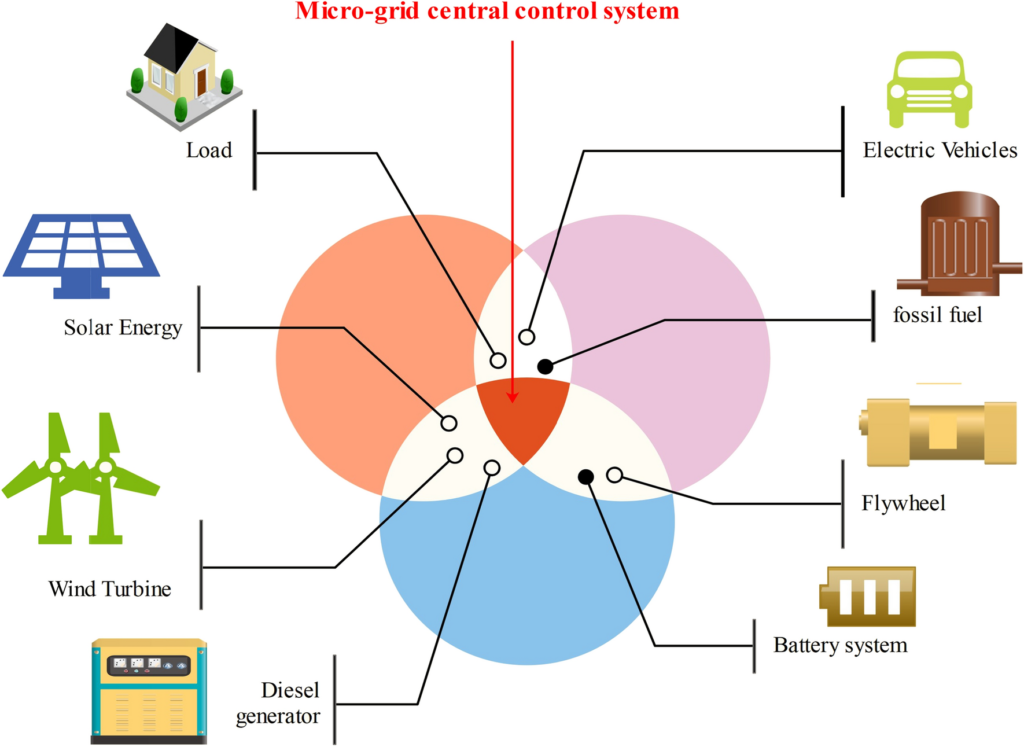
A Static Synchronous Compensator (STATCOM) supports voltage stability and power quality in microgrids by controlling reactive power exchange. Depending on system requirements, STATCOM devices commonly operate in voltage control, reactive power control, or power factor control modes.
In voltage control mode, the STATCOM adjusts reactive power output to maintain a stable system voltage. Reactive power control mode regulates the amount of reactive power supplied to or absorbed from the electrical network according to operating conditions.
Power factor control mode maintains a desired power factor by compensating for reactive power demand from industrial loads and other equipment. Modern microgrid controllers can coordinate STATCOM operation with generators, energy storage systems, and renewable resources.
Selecting the appropriate control mode improves power quality, reduces voltage fluctuations, and supports efficient operation across a smart power management framework.
How Microgrid Controllers Improve System Performance
Modern microgrids depend on intelligent control technologies to maintain reliable operation across changing energy conditions. Advanced controllers continuously monitor generation, electrical demand, energy storage, and grid conditions to support real-time decision-making. This allows the system to respond quickly to equipment disturbances and fluctuations in renewable generation.
Controllers also improve energy optimization by determining when generators should operate, batteries should charge or discharge, and electricity should be exchanged with the utility grid. Effective coordination can reduce unnecessary fuel consumption, improve equipment utilization, and support stable power delivery.
As microgrids become more complex, automation and predictive technologies will further improve their capabilities. Advanced monitoring, forecasting, and predictive control can help businesses anticipate changes in energy demand and optimize available power resources. These developments will make microgrid controllers increasingly important for building a future-ready energy infrastructure.
Power Smarter Microgrids with ALEO Solutions
Selecting the right control strategy is essential for maintaining stability, efficiency, and reliability across modern microgrids. From primary, secondary, and tertiary control to group coordination, DC operating modes, and STATCOM control, intelligent system management enables different energy resources to operate as one coordinated network.
ALEO provides industrial microgrid and power solutions designed to support reliable and scalable energy infrastructure. With UL certification from the USA, direct shipment from the United States, professional on-site installation and debugging support, and a 1-year warranty, ALEO helps businesses strengthen their energy systems with dependable technology and technical expertise.
Visit our website and connect with us to explore reliable microgrid solutions designed to support your operational requirements and long-term energy resilience goals.