Selecting an industrial generator is a capital and reliability decision, not a catalog click. This guide is written for EPC contractors, plant engineers, and procurement teams specifying diesel or gas generator sets in the 18 kW–2 MW range for factories, mines, oilfields, data rooms, and hybrid microgrids.
Aleo Power manufactures and engineers diesel and gas gensets and hybrid power packages from its headquarters in Wuxi, Jiangsu, with sales support from Guangzhou. Typical project lead time is about 30 days, based on 10 years of industrial power delivery experience. Use the steps below to narrow fuel type, rating, and package scope before you request a quotation.
1. Start with duty cycle, not nameplate kW
Most industrial RFQs fail because “200 kW” is stated without duty:
- Standby — emergency backup; limited annual hours; often sized to critical load only.
- Prime — primary power with variable load; allow headroom for peaks and maintenance.
- Continuous — baseload or near-constant load (e.g. oilfield associated-gas generation); prioritize fuel efficiency, heat rejection, and service intervals.
State expected annual running hours, load profile (flat vs cyclic), and whether the set will run in island mode or in parallel with utility / other gensets.
2. Convert process load into a genset rating
Ask engineering for:
- Running kW and kVA at target power factor (often 0.8 lagging for industrial sets).
- Largest motor starting method (DOL, soft start, VFD) and allowable voltage dip.
- Nonlinear loads (VFDs, UPS, welders) that raise harmonic content and may need oversized alternators.
- Site altitude and ambient temperature — both derate engine output; ignore them and the set will trip on hot days.
For mid-range industrial diesel packages, see examples such as the XM-W130 diesel generator and the XM-C220 diesel generator. Treat published ratings as a starting point; final selection should be confirmed against your load study.
3. Diesel vs gas vs hybrid: choose on fuel and OPEX
| Option | Best when | Watch-outs |
|---|---|---|
| Diesel | Reliable liquid fuel logistics; standby or prime where gas is unavailable | Fuel cost and storage rules; emissions permits; cold-start aids |
| Gas (natural gas, biogas, CMM, APG, syngas) | Pipeline or process gas is available; long running hours; flare-gas monetization | Gas composition (methane %, contaminants); derating on low-BTU fuels; gas train design |
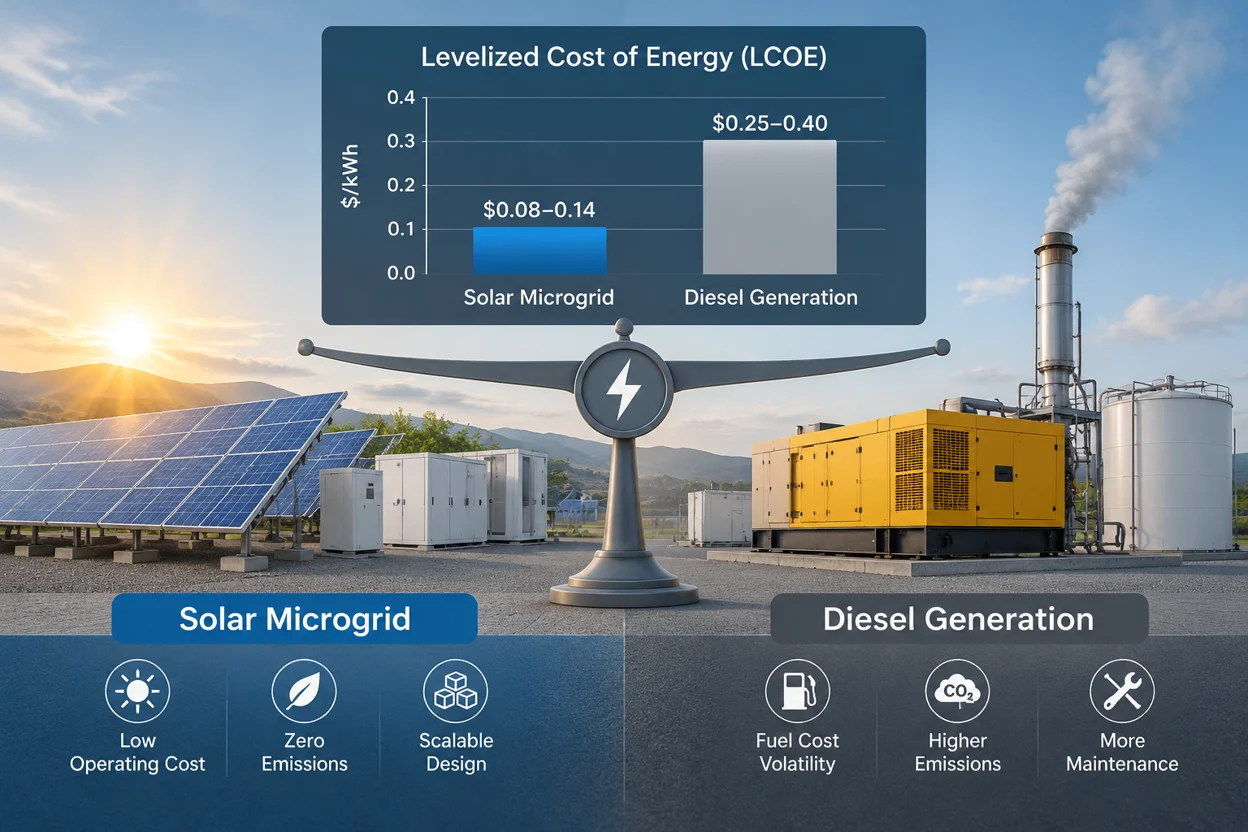
| Hybrid microgrid (PV + BESS + diesel/gas) | High diesel cost, daytime solar resource, or ESG targets | Controls complexity; battery cycling strategy; islanding / black-start design |
Gas-to-power is especially relevant for oilfield associated gas. See our case studies on turning flared associated gas into on-site power and the associated-gas microgrid case. For syngas packages, review the XE512-SY syngas generator set. For renewable hybrids, compare the hybrid microgrid system and PV-BESS-gas hybrid microgrid.
4. Package scope that procurement often under-specifies
Beyond the engine–alternator set, lock these items in the RFQ:
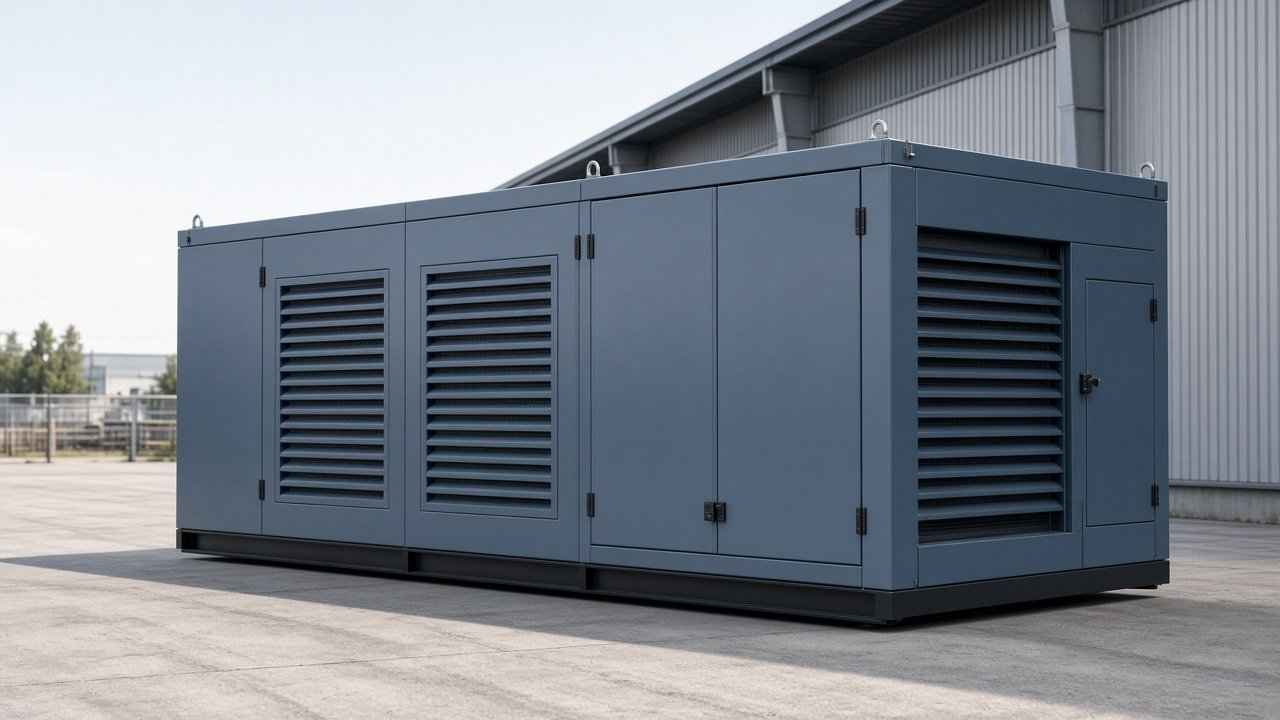
- Open set vs canopy vs containerized package (noise, weather, transport).
- Control system: single set AMF, multi-set paralleling, or microgrid EMS.
- Fuel system: day tank, bulk tank interface, gas train and pressure regulation.
- Cooling: radiator ambient rating, remote radiator, or heat recovery.
- Alternator protection, AVR type, and whether PMG is required for motor starting.
- Documentation: GA drawings, wiring diagrams, FAT protocol, spare-parts list, and recommended overhaul kit.
5. B2B procurement checklist (copy into your RFQ)
- Site location, altitude, max/min ambient, humidity, dust/corrosive atmosphere.
- Duty (standby / prime / continuous) and expected annual hours.
- Load list with starting method for the three largest motors.
- Fuel type and guaranteed quality (diesel grade; gas composition analysis).
- Voltage, frequency, phases, and whether N+1 or parallel operation is required.
- Noise limit at 1 m / at site boundary; emissions standard if applicable.
- Delivery Incoterms, destination port, and required lead time (Aleo Power standard projects typically target ~30 days after technical freeze).
- FAT witness scope, warranty terms, and remote commissioning support.
6. Total cost of ownership beats lowest CAPEX
For continuous or high-hour prime duty, fuel usually dominates TCO. A slightly higher-efficiency gas set or a PV-BESS-diesel hybrid can pay back through liters avoided—not through the purchase price alone. Ask vendors for specific fuel consumption (g/kWh or L/kWh) at 50%, 75%, and 100% load, and for service interval costs over 8,000–16,000 hours.
7. Next steps with Aleo Power
Browse the full product catalog, review additional project cases, or read how we structure delivery on the Service page. For a sized proposal, send your load list and fuel data via Contact Us (email: alan@aleopower.com).
Author: Aleo Power — industrial diesel & gas generator manufacturer, Wuxi HQ / Guangzhou sales.