Maximizing Asset Value: Strategies for Extending Transformer Service Life

Table of Contents

In the modern electrical grid, transformers are among the most critical—and capital-intensive—assets. While designed to operate reliably for decades, their actual longevity is heavily dictated by the quality of care they receive. Even the most robust dry-type transformer can suffer premature failure without a regimen of proper maintenance, advanced monitoring, and correct application.

Given today’s aging infrastructure and the extended procurement lead times for new equipment, lifecycle extension is no longer just a “nice-to-have”—it is an operational necessity. When replacement timelines stretch into months, maintaining the health of existing equipment is paramount to business continuity.

At Aleo Power, we believe reliability goes beyond the manufacturing floor. It requires a lifecycle strategy. Through smart preventive measures and the integration of modern monitoring technologies, operators can significantly extend service life, minimize unplanned downtime, and safeguard their investment.
Why Lifecycle Extension Matters

Transformers serve as the heartbeat of industries ranging from manufacturing and data centers to renewable energy farms. A failure in these systems can trigger:

  • Operational Paralysis: Costly downtime and production halts.
  • Safety Hazards: Increased risk of electrical fires or arc flashes.
  • Financial Penalties: Breach of service-level agreements.
  • Supply Chain Delays: Extended outages due to long lead times for replacement units.

Furthermore, extending the life of existing infrastructure supports sustainability goals by reducing industrial waste and the carbon footprint associated with manufacturing new heavy equipment.

5 Core Preventive Strategies for Dry-Type Transformers

Dry-type transformers require specific maintenance protocols distinct from oil-filled units. The focus shifts from oil analysis to insulation integrity, thermal management, and environmental hygiene.

1. Partial Discharge (PD) Monitoring

Partial Discharge is often the “canary in the coal mine” for insulation stress. Since dry-type units rely on solid insulation, detecting PD is critical. It can indicate voids, cracks, or surface contamination on windings.

  • Action: Implement routine PD testing or continuous online monitoring to identify degradation before it leads to a catastrophic dielectric failure.

2. Thermal Imaging & Temperature Control

Heat is the primary enemy of transformer longevity. Elevated temperatures accelerate the aging of insulation materials.

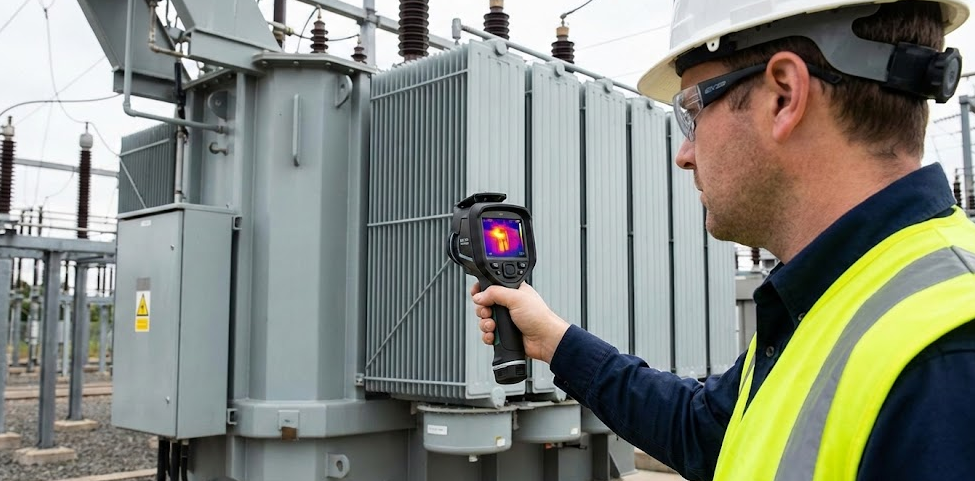
  • Action: Regular thermal imaging scans can reveal hotspots, loose connections, or blocked cooling channels. integrating real-time temperature sensors allows operators to understand how the unit responds to peak loads.

3. Environmental Hygiene

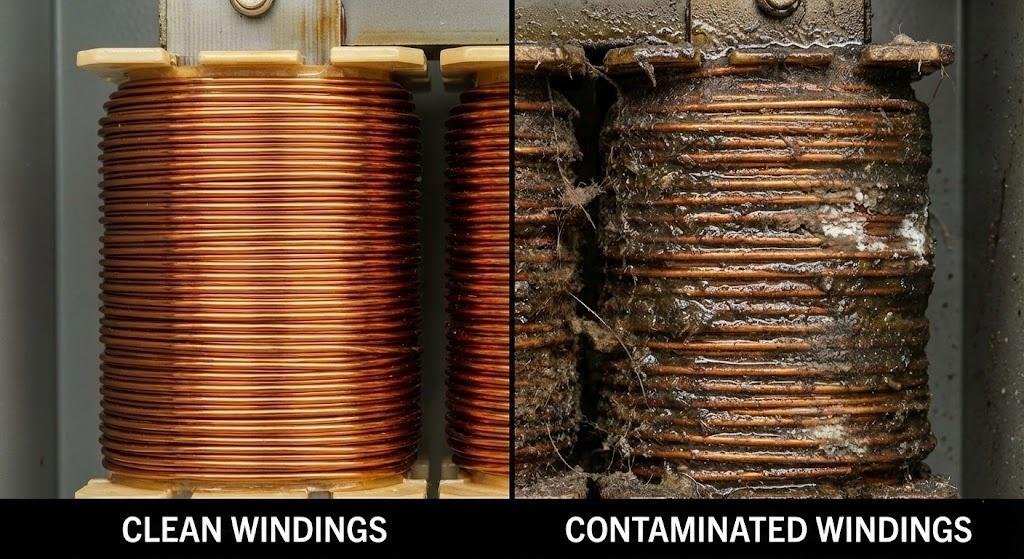
Air-cooled transformers are susceptible to their surroundings. Dust and airborne contaminants can settle on windings, reducing cooling efficiency and creating conductive paths for tracking.

  • Action: Routine cleaning and inspection are non-negotiable. Ensure ventilation paths are clear, humidity is controlled, and enclosures are rated for the specific environment (e.g., protecting against corrosive elements).
4. Electrical & Mechanical Integrity Testing

Routine diagnostic tests provide a snapshot of the transformer’s internal health.

  • Key Tests: Insulation resistance, turns ratio, and winding resistance testing.
  • Action: Perform Frequency Response Analysis (FRA) to detect mechanical movement or deformation of the core and windings, especially after a fault event.

5. Load Management

Overloading, even briefly, can cause cumulative thermal damage.

  • Action: Operate within nameplate ratings. Be vigilant about non-linear loads and harmonics, which cause additional heating. Ensure that equipment clustering does not restrict airflow around the unit.

From Reactive to Predictive: The Role of Digital Monitoring

Traditional maintenance relies on periodic checks, leaving “blind spots” where failures can develop unnoticed. The industry is shifting toward Condition-Based Maintenance (CBM) via continuous monitoring.

Modern systems now track:

  • Real-time winding temperatures
  • Vibration and airflow
  • Load profiles and harmonic distortion

This data allows Aleo Power clients to predict failures before they happen, transforming maintenance from an emergency response into a planned operational task.

The Aleo Power Approach

Reliability is engineered, not accidental. Aleo Power solutions are designed with long-term performance in mind.

  • Design for Maintainability: Our units feature accessible inspection points and optimized airflow designs to reduce thermal stress.
  • Future-Ready Integration: We support the integration of IoT sensors and third-party monitoring systems to keep you connected to your asset’s health.
  • Expert Support: From installation to end-of-life planning, our team assists with load analysis and environmental control recommendations.

Extending transformer life is about operational resilience. By combining robust engineering with proactive care, you can add years to your equipment’s life.
Facebook
Twitter
LinkedIn

More Posts

Send Us A Message

FAQ

About generator sets

Q1: Why are some generators on the market with the same power rating much cheaper than yours?

ALEO: Please be very careful. The industry is rife with “refurbished machines” or “fake brand machines” (especially from certain regions). They repaint used engines to sell as new or pass off standby power as prime power. ALEO guarantees 100% genuine new machines, with serial numbers verifiable in the factory system, and we provide load test videos for verification.

ALEO: Absolutely. This is a core advantage of our EPIOR Gas Generator Sets. Our units have excellent adaptability to Associated Petroleum Gas (APG). Generating electricity from this waste gas brings your fuel cost to near zero and solves environmental emission issues, offering an extremely high ROI.

ALEO: If you need Standby Power for data centers or hospitals to prevent outages, choose Diesel, as it starts quickly and handles load spikes well. If you need Continuous Power for mines or oil fields running 24/7 and have a gas source, choose Gas, as it has extremely low operating costs and a longer lifespan.

ALEO: For data centers, we offer specialized Fast-Start Diesel Gensets. They are optimized for Block Loading, capable of starting and taking load within seconds. Combined with our paralleling system, we can achieve N+1 redundancy, ensuring 99.99% power reliability.

ALEO: Yes. For high-power units above 1000kW, we recommend using High Voltage Generators (10.5kV). This allows direct connection to the HV grid, avoiding high current losses and heating from low-voltage transmission, and saving you the cost of expensive LV cables and transformers.

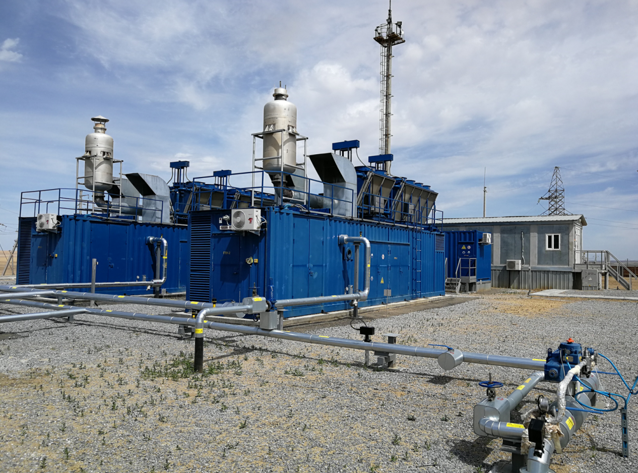
ALEO: We offer Containerized Generator Sets. They are “plug-and-play” with high protection ratings, featuring built-in cooling, silencing, lighting, and fire suppression systems. You can place them directly on an outdoor concrete pad; they are weatherproof and dustproof, perfect for mines or field sites.

ALEO: Absolutely. We have a dedicated Biogas Series designed with special anti-corrosion treatment for impurities like hydrogen sulfide found in biogas. Combined with a Combined Heat and Power (CHP) system, you can generate electricity and recover waste heat for fermenter insulation, achieving a total thermal efficiency of over 80%.

ALEO: To be honest, high-horsepower imported engines (like Perkins or MTU) are in short supply globally. Typically, the engine lead time alone is 2-3 months, so with assembly and testing, the total delivery time is usually 5-6 months. If a supplier promises immediate stock, it is likely a refurbished machine or old inventory.

ALEO: We recommend a “Solar-Diesel-Storage” Microgrid Solution. Use solar power during the day and battery storage at night, with the diesel generator running only as a backup during cloudy days or when batteries are depleted. Our control system automatically manages these three energy sources to minimize diesel consumption.

ALEO: We can provide Installation Guidance Services. We can dispatch senior engineers to the site or guide your local team via remote video link. Additionally, our designs are highly modular (especially containerized units), requiring only cable and fuel pipe connections onsite, significantly reducing the technical requirements for local installation personnel.

About microgrid

Q1: What is a PV-BESS-Diesel/Gas Hybrid Microgrid System?

ALEO: It is an integrated power solution combining solar PV, battery energy storage, and diesel or gas generators. Solar power reduces fuel consumption during the day, the battery stabilizes power and stores excess energy, while the generator provides backup power when solar and battery capacity are not enough.

ALEO: A traditional diesel-only system consumes fuel continuously. A hybrid microgrid uses solar + battery first, and only starts the diesel generator when necessary. This helps reduce fuel cost, maintenance frequency, noise, emissions, and long-term operating expenses.

ALEO: Yes. ALEO can design off-grid microgrid systems for remote areas, islands, mining sites, farms, telecom stations, factories, and communities where grid power is unavailable or unstable. The system can automatically balance solar power, battery storage, and generator output.

ALEO: The system is controlled by an intelligent EMS / Microgrid Controller. It monitors load demand, solar generation, battery SOC, generator status, and power quality in real time. The controller automatically chooses the most economical and stable power source.

ALEO: Yes, depending on the battery capacity and load demand. ALEO will calculate the required BESS capacity based on your night-time power consumption, backup time requirement, solar resources, and generator configuration to ensure stable power supply.

ALEO: When solar generation drops, the battery will discharge first. If the battery level becomes low or the load is too high, the diesel or gas generator will automatically start. This ensures continuous power supply even in unstable weather conditions.

ALEO: Yes. By using solar energy and battery storage, the generator does not need to run all the time. Fuel savings depend on sunlight conditions, load profile, battery size, and operating strategy. ALEO provides customized system simulation to estimate your expected fuel reduction.

ALEO: It depends on your fuel availability and project conditions. Diesel generators are suitable for flexible backup and areas where diesel supply is easy. Gas generators are ideal for sites with natural gas, biogas, associated petroleum gas, or other available gas sources, especially for long-running power projects.

ALEO: Yes. ALEO can provide containerized microgrid solutions, including PV inverters, BESS, control system, distribution cabinet, diesel or gas generator, fire protection, HVAC, and remote monitoring. Containerized design makes transportation, installation, and commissioning easier.

ALEO: We usually need your load capacity, daily power consumption, peak load, location, sunlight conditions, fuel type, backup time requirement, grid availability, and application scenario. Based on this information, ALEO can provide a customized PV-BESS-Diesel or PV-BESS-Gas hybrid microgrid solution.

ALEO: Yes. ALEO can provide remote monitoring and intelligent operation management. Users can check PV generation, battery SOC, generator running status, load consumption, alarms, and system performance in real time through a monitoring platform. This helps reduce on-site maintenance pressure and improves system reliability.

ALEO: Yes. These are exactly the key application scenarios for ALEO hybrid microgrid solutions. For areas with high fuel transport cost, unstable grid power, or no grid access, ALEO can customize PV-BESS-Diesel Hybrid Microgrid System or PV-BESS-Gas Hybrid Microgrid System to provide stable, economical, and continuous power supply.


INQUIRY NOW

ALEO Team will respond you in 24 hours with best solution.