Dry-Type vs. Oil-Immersed Transformers: How to Choose Based on Project Requirements

Table of Contents

When planning an electrical distribution system, selecting the right transformer is a critical decision that impacts safety, reliability, total cost of ownership, and project feasibility. The two primary contenders in the medium-voltage and high-power landscape are dry-type transformers and oil-immersed transformers. While both serve the same fundamental purpose of changing voltage levels, their inherent design differences make each suitable for specific applications.

This guide breaks down the key characteristics, advantages, and limitations of each type to help you make an informed choice for your next project.
Core Technology and Construction

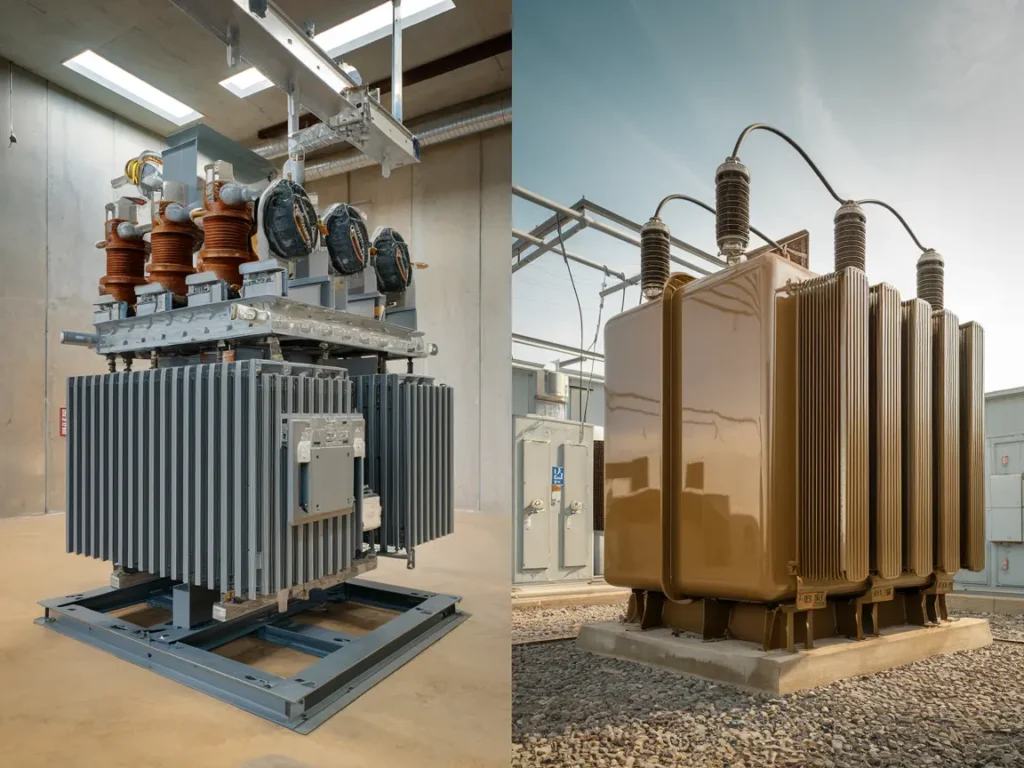
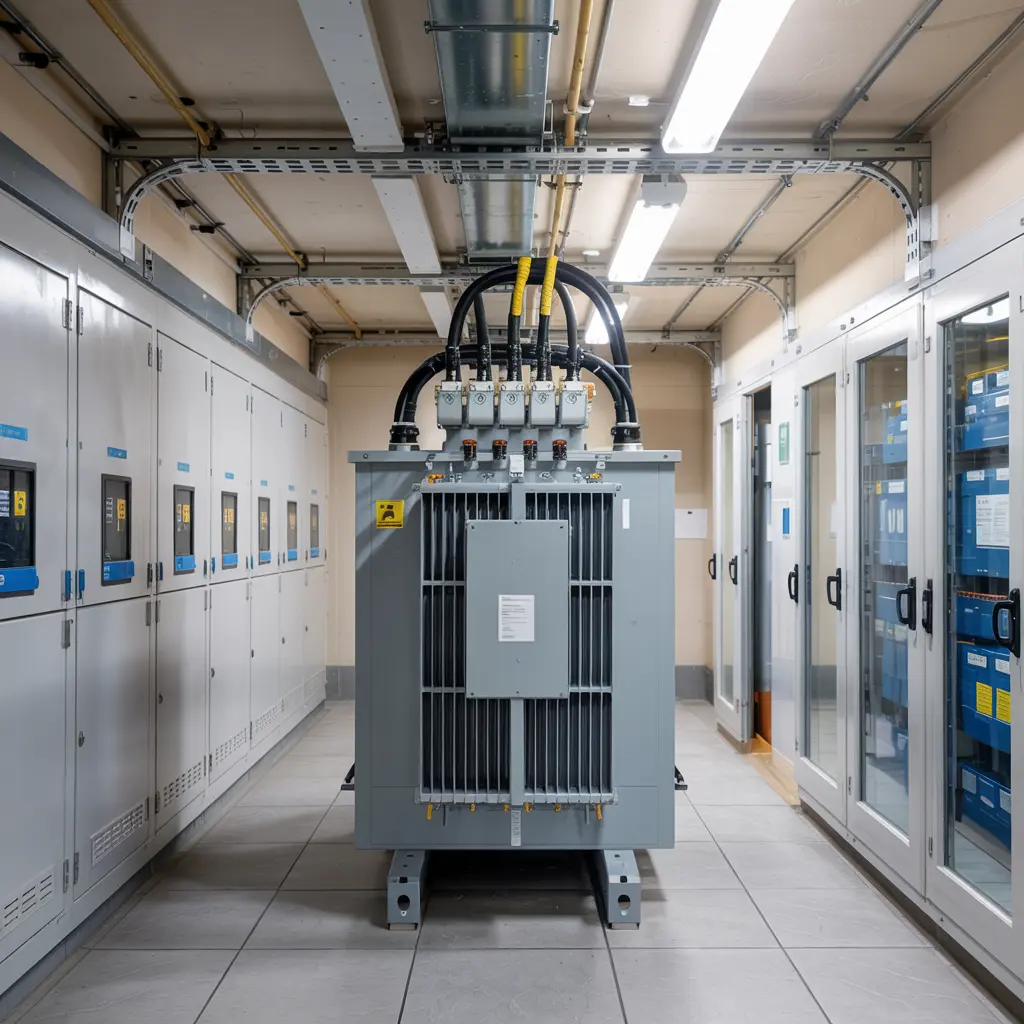
Dry-Type Transformers use air or solid insulation (like epoxy resin or vacuum pressure impregnation) to cool and insulate their core and windings. They are often housed in a ventilated enclosure.

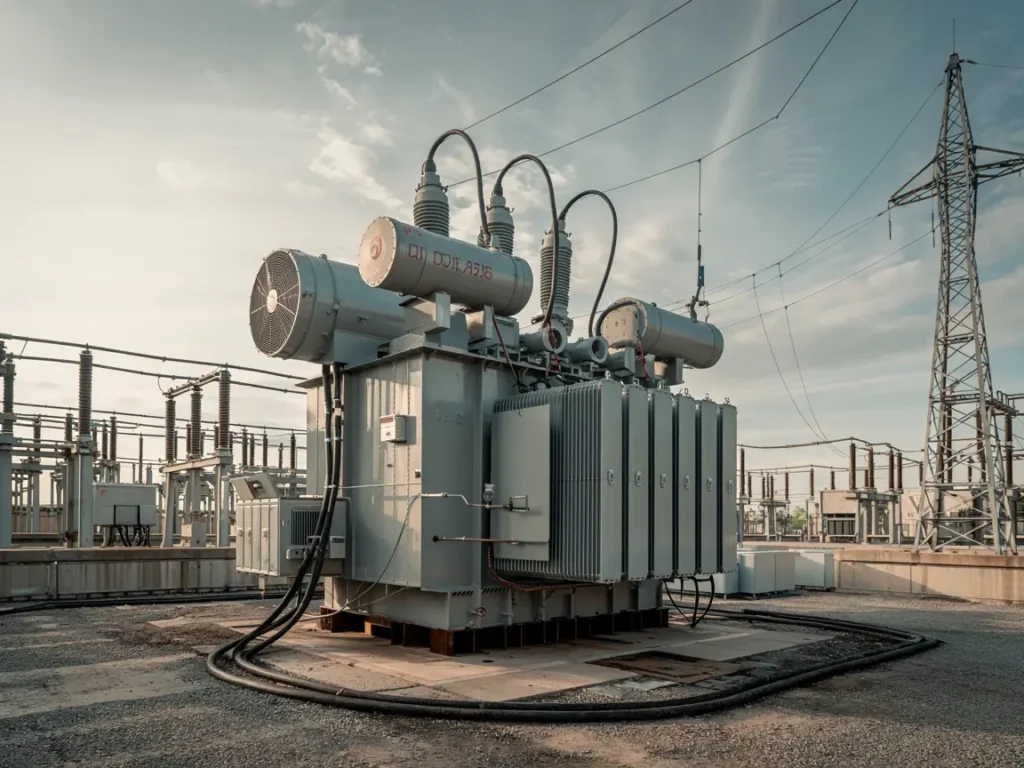
Oil-Immersed Transformers submerge their core and windings in a dielectric insulating oil, typically contained within a sealed steel tank. The oil acts as both an insulator and a coolant, dissipating heat through radiators.

Key Comparison Factors

FeatureDry-Type TransformerOil-Immersed Transformer
Cooling/Insulation MediumAir, Epoxy Resin, Cast CoilMineral or Synthetic Oil
Fire Safety & Environmental RiskHigher Safety. Non-flammable insulation eliminates risk of oil fires or spills. Ideal for indoor, populated areas.Requires Containment. Oil is flammable and poses a spill risk. Requires vaults, dykes, and fire suppression systems indoors.
Location & SpaceFlexible Indoor Installation. Can be placed directly in electrical rooms, basements, or near the load. Saves on cable costs.Typically Outdoor/ Dedicated Vaults. Best suited for outdoor substations or fire-rated indoor vaults due to oil risk.
Efficiency & LossesSlightly higher no-load and load losses. Efficiency is very good but generally lower than equivalent oil-filled units.Higher Efficiency. Lower operating losses due to superior cooling properties of oil, leading to lower long-term energy costs.
Overload CapacityLimited. Air cooling is less effective for sustained overloads.Excellent. Oil’s thermal capacity allows for better short-term overload handling.
MaintenanceLow. Primarily involves cleaning, checking connections, and monitoring cooling fans. No oil testing.Regular & Critical. Requires periodic oil sampling, testing (dielectric strength, moisture, DGA), filtration, and leak inspections.
Initial CostGenerally higher for equivalent ratings due to costly insulation materials.Generally lower initial purchase cost.
Lifespan & Reliability20-30 years. Sensitive to ambient conditions (dust, moisture, corrosive atmospheres).30-40+ years. Proven, robust technology. Protected internal components are less susceptible to environmental contaminants.
Noise LevelCan be louder; cooling fans add to audible noise.Quieter operation; tank muffles core noise.
Power Rating & VoltageTypically up to ~30-35 MVA and up to 66 kV. Common in medium-voltage applications.Can be built for much higher ratings (hundreds of MVA) and ultra-high voltages (HV/EHV). The standard for utility-scale power transmission.

How to Choose: Matching Transformer to Project Needs

Use this decision framework to guide your selection:

Choose a DRY-TYPE Transformer if your project involves:

  • Indoor Installations: Commercial buildings (high-rises, hospitals, airports, data centers), manufacturing plants, tunnels, underground facilities.
  • Fire Safety is Paramount: Locations with strict fire codes, crowded spaces, or where environmental contamination is unacceptable.
  • Lower Maintenance Commitment: Sites without dedicated substation maintenance teams.
  • Lower Load Density & Proximity to Load: Where placing the transformer close to electrical panels reduces distribution losses.
Choose an OIL-IMMERSED Transformer if your project involves:

  • Outdoor Substations: Utility power distribution, industrial plants with outdoor yards, renewable energy farms (solar/wind).
  • High Power & Voltage Requirements: Projects needing ratings above 30 MVA or primary voltages above 66 kV.
  • Cost-Effectiveness for High Loads: Where lower initial cost and higher efficiency justify the need for containment systems.
  • Harsh Environments (Outdoor): The sealed tank provides excellent protection against moisture and contaminants.
  • Proven, Long-Term Reliability: Applications where a decades-long service life with proven technology is the top priority.
The Total Cost of Ownership (TCO) Perspective

Look beyond the initial purchase price. While dry-types often have a higher upfront cost, they can save significantly on installation (no vaults/dykes) and maintenance. Oil-immersed units, with a lower initial cost, may incur higher lifetime costs for civil works (vaults), oil management, and more intensive maintenance, but offer savings through higher efficiency.

Conclusion

There is no universal “best” transformer. The optimal choice is a direct function of your specific project requirements, location, budget, and risk profile.

  • Prioritize safety, indoor placement, and lower maintenance? A Dry-Type Transformer is likely your solution.
  • Need high power, high efficiency for an outdoor site, and have maintenance capabilities? An Oil-Immersed Transformer remains the robust, economical workhorse.

For critical applications, always consult with a qualified electrical engineer or transformer specialist to perform a detailed analysis tailored to your project’s lifecycle needs.
Facebook
Twitter
LinkedIn

More Posts

What Are the Downsides of Microgrids? 

Learn the advantages and disadvantages of a microgrid power system, including reliability, environmental impact, renewable energy challenges, and when microgrids are the right choice.

Send Us A Message

About generator sets

Q1: Why are some generators on the market with the same power rating much cheaper than yours?

ALEO: Please be very careful. The industry is rife with “refurbished machines” or “fake brand machines” (especially from certain regions). They repaint used engines to sell as new or pass off standby power as prime power. ALEO guarantees 100% genuine new machines, with serial numbers verifiable in the factory system, and we provide load test videos for verification.

ALEO: Absolutely. This is a core advantage of our EPIOR Gas Generator Sets. Our units have excellent adaptability to Associated Petroleum Gas (APG). Generating electricity from this waste gas brings your fuel cost to near zero and solves environmental emission issues, offering an extremely high ROI.

ALEO: If you need Standby Power for data centers or hospitals to prevent outages, choose Diesel, as it starts quickly and handles load spikes well. If you need Continuous Power for mines or oil fields running 24/7 and have a gas source, choose Gas, as it has extremely low operating costs and a longer lifespan.

ALEO: For data centers, we offer specialized Fast-Start Diesel Gensets. They are optimized for Block Loading, capable of starting and taking load within seconds. Combined with our paralleling system, we can achieve N+1 redundancy, ensuring 99.99% power reliability.

ALEO: Yes. For high-power units above 1000kW, we recommend using High Voltage Generators (10.5kV). This allows direct connection to the HV grid, avoiding high current losses and heating from low-voltage transmission, and saving you the cost of expensive LV cables and transformers.

ALEO: We offer Containerized Generator Sets. They are “plug-and-play” with high protection ratings, featuring built-in cooling, silencing, lighting, and fire suppression systems. You can place them directly on an outdoor concrete pad; they are weatherproof and dustproof, perfect for mines or field sites.

ALEO: Absolutely. We have a dedicated Biogas Series designed with special anti-corrosion treatment for impurities like hydrogen sulfide found in biogas. Combined with a Combined Heat and Power (CHP) system, you can generate electricity and recover waste heat for fermenter insulation, achieving a total thermal efficiency of over 80%.

ALEO: To be honest, high-horsepower imported engines (like Perkins or MTU) are in short supply globally. Typically, the engine lead time alone is 2-3 months, so with assembly and testing, the total delivery time is usually 5-6 months. If a supplier promises immediate stock, it is likely a refurbished machine or old inventory.

ALEO: We recommend a “Solar-Diesel-Storage” Microgrid Solution. Use solar power during the day and battery storage at night, with the diesel generator running only as a backup during cloudy days or when batteries are depleted. Our control system automatically manages these three energy sources to minimize diesel consumption.

ALEO: We can provide Installation Guidance Services. We can dispatch senior engineers to the site or guide your local team via remote video link. Additionally, our designs are highly modular (especially containerized units), requiring only cable and fuel pipe connections onsite, significantly reducing the technical requirements for local installation personnel.

About microgrid

Q1: What is a PV-BESS-Diesel/Gas Hybrid Microgrid System?

ALEO: It is an integrated power solution combining solar PV, battery energy storage, and diesel or gas generators. Solar power reduces fuel consumption during the day, the battery stabilizes power and stores excess energy, while the generator provides backup power when solar and battery capacity are not enough.

ALEO: A traditional diesel-only system consumes fuel continuously. A hybrid microgrid uses solar + battery first, and only starts the diesel generator when necessary. This helps reduce fuel cost, maintenance frequency, noise, emissions, and long-term operating expenses.

ALEO: Yes. ALEO can design off-grid microgrid systems for remote areas, islands, mining sites, farms, telecom stations, factories, and communities where grid power is unavailable or unstable. The system can automatically balance solar power, battery storage, and generator output.

ALEO: The system is controlled by an intelligent EMS / Microgrid Controller. It monitors load demand, solar generation, battery SOC, generator status, and power quality in real time. The controller automatically chooses the most economical and stable power source.

ALEO: Yes, depending on the battery capacity and load demand. ALEO will calculate the required BESS capacity based on your night-time power consumption, backup time requirement, solar resources, and generator configuration to ensure stable power supply.

ALEO: When solar generation drops, the battery will discharge first. If the battery level becomes low or the load is too high, the diesel or gas generator will automatically start. This ensures continuous power supply even in unstable weather conditions.

ALEO: Yes. By using solar energy and battery storage, the generator does not need to run all the time. Fuel savings depend on sunlight conditions, load profile, battery size, and operating strategy. ALEO provides customized system simulation to estimate your expected fuel reduction.

ALEO: It depends on your fuel availability and project conditions. Diesel generators are suitable for flexible backup and areas where diesel supply is easy. Gas generators are ideal for sites with natural gas, biogas, associated petroleum gas, or other available gas sources, especially for long-running power projects.

ALEO: Yes. ALEO can provide containerized microgrid solutions, including PV inverters, BESS, control system, distribution cabinet, diesel or gas generator, fire protection, HVAC, and remote monitoring. Containerized design makes transportation, installation, and commissioning easier.

ALEO: We usually need your load capacity, daily power consumption, peak load, location, sunlight conditions, fuel type, backup time requirement, grid availability, and application scenario. Based on this information, ALEO can provide a customized PV-BESS-Diesel or PV-BESS-Gas hybrid microgrid solution.

ALEO: Yes. ALEO can provide remote monitoring and intelligent operation management. Users can check PV generation, battery SOC, generator running status, load consumption, alarms, and system performance in real time through a monitoring platform. This helps reduce on-site maintenance pressure and improves system reliability.

ALEO: Yes. These are exactly the key application scenarios for ALEO hybrid microgrid solutions. For areas with high fuel transport cost, unstable grid power, or no grid access, ALEO can customize PV-BESS-Diesel Hybrid Microgrid System or PV-BESS-Gas Hybrid Microgrid System to provide stable, economical, and continuous power supply.


INQUIRY NOW

ALEO Team will respond you in 24 hours with best solution.