In remote oilfield projects, stable power supply is essential for smooth operations. These sites are often far from the main grid, with high electricity demands and equipment that cannot tolerate outages. At the same time, associated petroleum gas generated during oil extraction is often vented or flared if it cannot be fully utilized. This leads to wasted energy, environmental pollution, and safety risks.
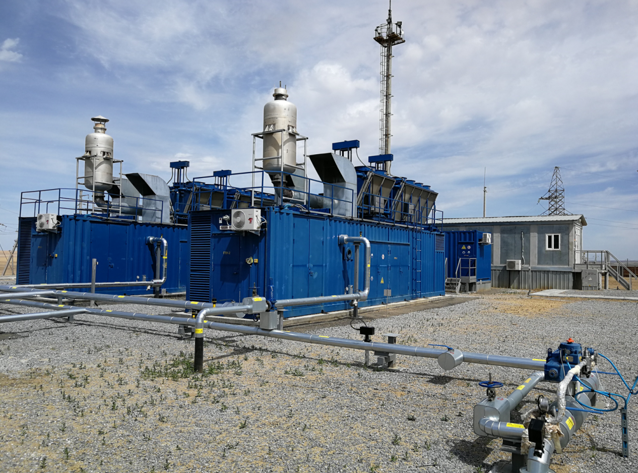
In a real-world project in Kazakhstan, ALEO provided a comprehensive energy solution by deploying gas generators integrated with a microgrid system. The solution converted associated gas into reliable, continuous electricity for the site.
Project Background: Challenges at the Oilfield
Remote Location and High Reliability Needs
Oilfields are typically located in isolated areas with limited grid access. Pumps, compressors, control systems, lighting, and living facilities all require continuous power. Any interruption could cause production downtime, equipment damage, and safety hazards.
Underutilized Associated Gas
Associated gas is a byproduct of oil extraction. Without industrial recovery systems, it is often vented or flared. This not only wastes valuable energy but also contributes to greenhouse gas emissions.
Environmental and Safety Concerns
Direct flaring increases pollution and fire risks. Reducing open flames, improving energy use, and maintaining safety are top priorities. The client needed a solution addressing stable power, resource efficiency, and site safety.
Solution Approach: Gas Generators in Action
Converting Associated Gas into Electricity
ALEO’s approach leveraged available associated gas as fuel for gas generators, turning potential waste into usable electricity.
Powering Production and Living Areas
Generated electricity supported production equipment, control systems, lighting, and residential facilities—critical for remote oilfield operations.
Reducing Waste and Boosting Efficiency
Unlike flaring or venting, converting associated gas into electricity maximizes energy efficiency, lowers operational costs, and supports sustainable practices.
Microgrid Integration: Beyond Standalone Generators
Enhanced System Stability
Single generators can struggle with fluctuating loads. Integrating multiple generators into a microgrid ensures consistent power for both production and residential areas.
Gas Generators as Primary Power Source
In this project, gas generators served as the main power supply. They converted on-site associated gas into long-term, cost-effective electricity.
Diesel Generators as Backup
Diesel generators acted as backup or supplementary power. If gas supply was unstable or load surged unexpectedly, diesel units quickly supported the system, adding redundancy and reliability.
Smart Microgrid Control for Efficiency
The microgrid control system dynamically adjusted generator operation based on load demand. This reduced fuel waste, prevented unnecessary wear, and optimized overall performance.
Project Execution: From Assessment to Commissioning
Site Assessment
The team evaluated electricity demand, equipment types, operating hours, gas composition and pressure, ambient conditions, and installation space to design the generator system and microgrid.
Generator and Microgrid Design
Generators were selected to match load requirements. Backup diesel units, parallel operation capabilities, remote monitoring, and future microgrid expansion were incorporated.
Installation and Commissioning
Generators, fuel lines, electrical connections, and control systems were installed and tested under real load conditions, ensuring reliable operation.
Operation and Maintenance
Continuous monitoring of generator status, load fluctuations, and gas supply ensured timely maintenance, reduced downtime, and maintained system stability.
Project Benefits: What the Client Achieved
- Stable Power Supply – Reliable electricity for production equipment, control systems, and living areas.
- Increased Gas Utilization – Previously wasted associated gas was transformed into usable energy.
- Lower Environmental and Safety Risks – Reduced flaring, lower emissions, minimized fire hazards.
- Foundation for Future Expansion – Supports additional generators, energy storage, and renewable integration.
Extended Applications of ALEO Solutions
- Oilfields and Extraction Sites – Associated gas utilization and off-grid power solutions.
- Mining and Quarries – Diesel or gas generator microgrids for crushing, conveying, and site lighting.
- Industrial Parks – Coordinated multi-generator systems for load management and energy optimization.
- Data Centers and Hospitals – Diesel generators as critical backup for uninterrupted operations.
- Remote Off-Grid Projects – Standalone generator microgrids for long-term energy independence.
ALEO Project Insights
Successful industrial power projects require more than just generators. Key lessons include:
- Evaluate available fuel sources: associated gas, natural gas, or diesel.
- Consider load characteristics, including startup surges and fluctuations.
- Ensure backup power and multi-unit coordination.
- Integrate microgrid controls for seamless generator, storage, and load management.
- Design systems for continuous operation, not just short-term solutions.
Conclusion
This Kazakhstan oilfield case demonstrates that generators are more than backup equipment—they are central to the energy system. ALEO delivers not just gas and diesel generators, but complete microgrid solutions tailored to site conditions. Whether for oilfields, mines, industrial parks, or remote off-grid locations, reliable, efficient, and safe power is essential for uninterrupted operations.