In the modern electrical grid, transformers are among the most critical—and capital-intensive—assets. While designed to operate reliably for decades, their actual longevity is heavily dictated by the quality of care they receive. Even the most robust dry-type transformer can suffer premature failure without a regimen of proper maintenance, advanced monitoring, and correct application.
Given today’s aging infrastructure and the extended procurement lead times for new equipment, lifecycle extension is no longer just a “nice-to-have”—it is an operational necessity. When replacement timelines stretch into months, maintaining the health of existing equipment is paramount to business continuity.
At Aleo Power, we believe reliability goes beyond the manufacturing floor. It requires a lifecycle strategy. Through smart preventive measures and the integration of modern monitoring technologies, operators can significantly extend service life, minimize unplanned downtime, and safeguard their investment.
Why Lifecycle Extension Matters
Transformers serve as the heartbeat of industries ranging from manufacturing and data centers to renewable energy farms. A failure in these systems can trigger:
- Operational Paralysis: Costly downtime and production halts.
- Safety Hazards: Increased risk of electrical fires or arc flashes.
- Financial Penalties: Breach of service-level agreements.
- Supply Chain Delays: Extended outages due to long lead times for replacement units.
Furthermore, extending the life of existing infrastructure supports sustainability goals by reducing industrial waste and the carbon footprint associated with manufacturing new heavy equipment.
5 Core Preventive Strategies for Dry-Type Transformers
Dry-type transformers require specific maintenance protocols distinct from oil-filled units. The focus shifts from oil analysis to insulation integrity, thermal management, and environmental hygiene.
1. Partial Discharge (PD) Monitoring
Partial Discharge is often the “canary in the coal mine” for insulation stress. Since dry-type units rely on solid insulation, detecting PD is critical. It can indicate voids, cracks, or surface contamination on windings.
- Action: Implement routine PD testing or continuous online monitoring to identify degradation before it leads to a catastrophic dielectric failure.
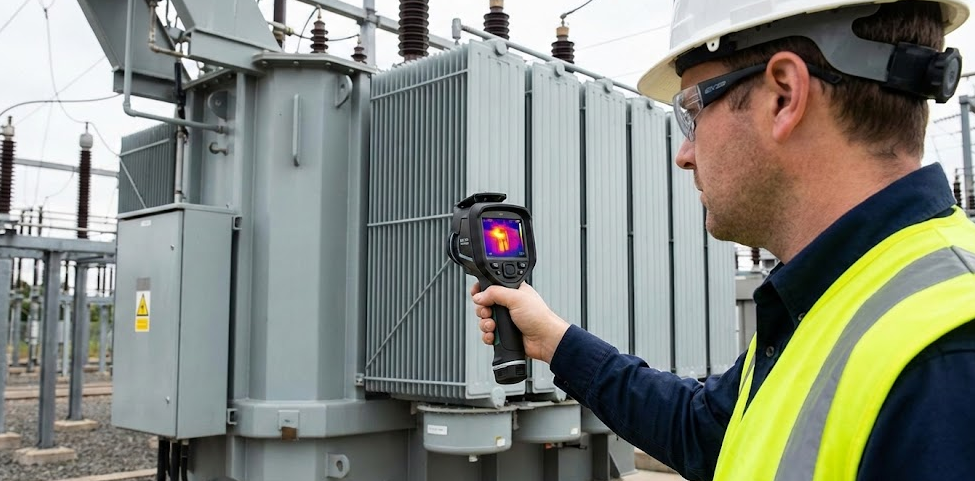
2. Thermal Imaging & Temperature Control
Heat is the primary enemy of transformer longevity. Elevated temperatures accelerate the aging of insulation materials.
- Action: Regular thermal imaging scans can reveal hotspots, loose connections, or blocked cooling channels. integrating real-time temperature sensors allows operators to understand how the unit responds to peak loads.
3. Environmental Hygiene
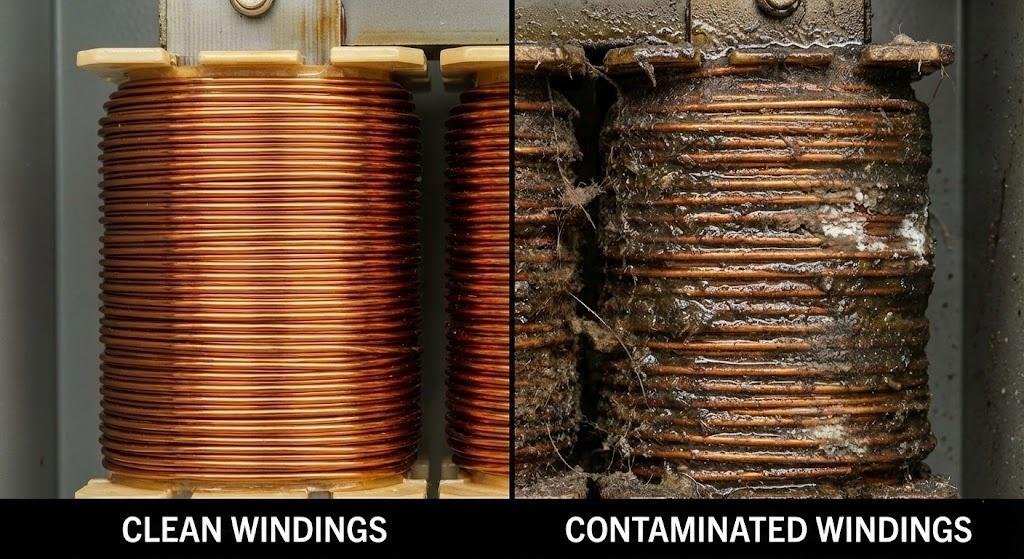
Air-cooled transformers are susceptible to their surroundings. Dust and airborne contaminants can settle on windings, reducing cooling efficiency and creating conductive paths for tracking.
- Action: Routine cleaning and inspection are non-negotiable. Ensure ventilation paths are clear, humidity is controlled, and enclosures are rated for the specific environment (e.g., protecting against corrosive elements).
4. Electrical & Mechanical Integrity Testing
Routine diagnostic tests provide a snapshot of the transformer’s internal health.
- Key Tests: Insulation resistance, turns ratio, and winding resistance testing.
- Action: Perform Frequency Response Analysis (FRA) to detect mechanical movement or deformation of the core and windings, especially after a fault event.
5. Load Management
Overloading, even briefly, can cause cumulative thermal damage.
- Action: Operate within nameplate ratings. Be vigilant about non-linear loads and harmonics, which cause additional heating. Ensure that equipment clustering does not restrict airflow around the unit.
From Reactive to Predictive: The Role of Digital Monitoring
Traditional maintenance relies on periodic checks, leaving “blind spots” where failures can develop unnoticed. The industry is shifting toward Condition-Based Maintenance (CBM) via continuous monitoring.
Modern systems now track:
- Real-time winding temperatures
- Vibration and airflow
- Load profiles and harmonic distortion
This data allows Aleo Power clients to predict failures before they happen, transforming maintenance from an emergency response into a planned operational task.
The Aleo Power Approach
Reliability is engineered, not accidental. Aleo Power solutions are designed with long-term performance in mind.
- Design for Maintainability: Our units feature accessible inspection points and optimized airflow designs to reduce thermal stress.
- Future-Ready Integration: We support the integration of IoT sensors and third-party monitoring systems to keep you connected to your asset’s health.
- Expert Support: From installation to end-of-life planning, our team assists with load analysis and environmental control recommendations.
Extending transformer life is about operational resilience. By combining robust engineering with proactive care, you can add years to your equipment’s life.