The New Reality of Grid Instability
At the end of April 2025, the Iberian Peninsula experienced one of the most significant power failures in recent memory. At approximately 12:30 p.m., the Spanish electricity grid lost 15 gigawatts of generation—likely due to a sudden drop in renewable sources—in a five-second collapse. The blackout impacted over 53 million people across Spain and Portugal, with ripple effects reaching into southern France.
In the modern industrial landscape, energy security is no longer a given; it is a variable. Amid widespread outages, however, critical infrastructure held steady. Data centers remained online, airport systems stayed operational, and key mining operations continued without a hitch. This resilience was not accidental—it was the result of robust engineering and Aleo Power’s advanced standby generators and Kinetic PowerPacks.
Mining Operations: The Toughest Test for Power
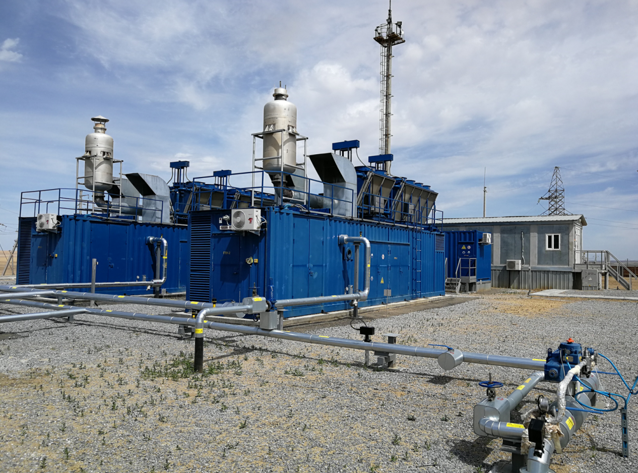
Mining represents one of the most hostile environments for power generation equipment. Located often at the end of weak utility lines or completely off-grid, mines require power that is not just available, but “stiff” enough to handle massive transient loads.
The Challenge of “Block Loading”
In a mining context, electricity must never be absent. Deep underground, ventilation systems and water pumps are life-support systems. If power fails, mines can flood, or air quality can deteriorate within minutes. Furthermore, mining equipment like crushers, winders, and hoists impose huge “step loads” on the grid.
When a public power supply fails, an Aleo Power diesel genset must take over immediately. The requirement here is “Block Loading Capability”—the ability of the generator to accept 100% of the load in a single step without stalling.
Aleo Power’s Solution
“The mining sector is where our engineering is truly tested,” explains the Technical Director at Aleo Power. “We design our gensets to withstand the freezing cold of Siberia or the seismic vibrations of the Andes.”
For example, in high-altitude mines in South America, the air is thin, which typically reduces engine power. Aleo Power utilizes advanced turbocharging technologies that compensate for altitude, ensuring that a 2000kW generator delivers its full rated power even at 3,000 meters above sea level.
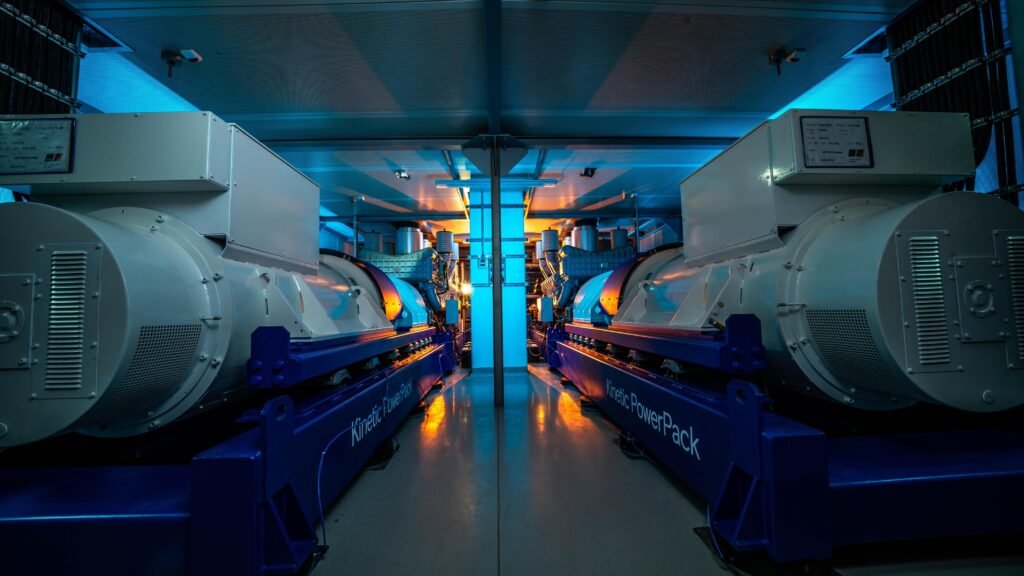
Beyond Diesel: The Kinetic PowerPack Technology
From semiconductor factories to pharmaceutical plants, some industries cannot afford even a millisecond of power interruption. For these scenarios, standard diesel generators are paired with our Kinetic PowerPacks.
How Dynamic UPS Works
This technology, known as Dynamic Uninterruptible Power Supply (DUPS), consists of a diesel engine coupled via an electromagnetic clutch to a kinetic energy storage device—essentially a flywheel weighing several tonnes.
- Grid Conditioning: During normal operation, the flywheel spins, acting as a filter. It compensates for voltage spikes and harmonic distortions, protecting sensitive IT equipment.
- The “Bridge”: If the grid fails, the spinning flywheel releases its stored kinetic energy to generate electricity instantly. This bridges the 10-second gap it takes for the diesel engine to start and reach full speed.
- No Batteries Needed: Unlike traditional static UPS systems that rely on massive chemical battery banks, the Kinetic PowerPack uses mechanical energy. This is more environmentally friendly (no battery disposal) and saves significant space.
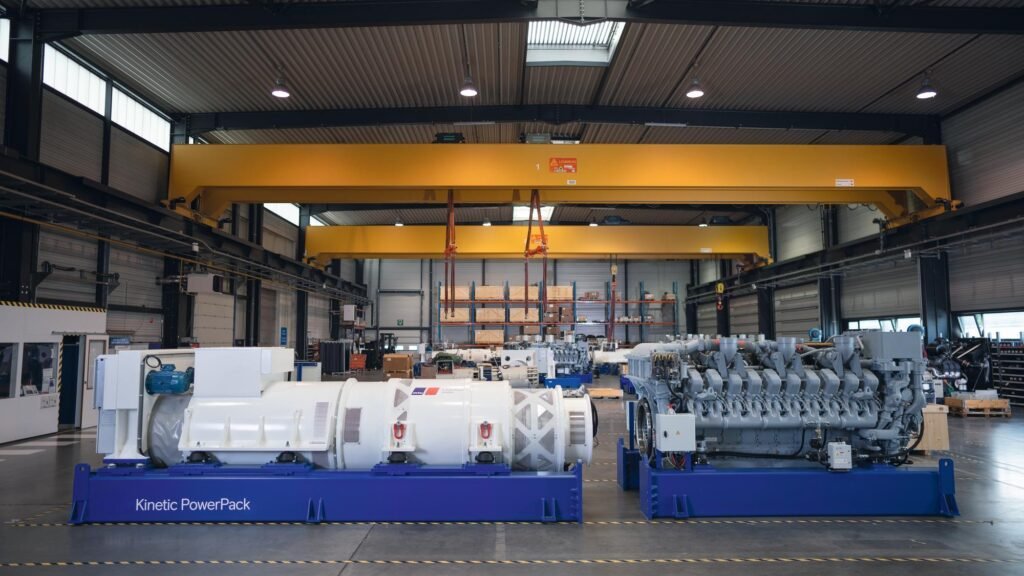
Real-World Case Studies: Aleo Power in Action
Our technology is not theoretical; it is operational across the globe. Here are specific examples of how Aleo Power solutions are deployed.
1. The Data Center Boom: Sines, Portugal
Six Series 4000 diesel gensets, each delivering 2560 kW, ensure a total of 15 MW backup power for Start Campus’s hyperscale data center in Sines, Portugal.
“The biggest driver in the market is the data center industry,” says our European Sales Director. With the rise of AI and streaming, demand for computing power has skyrocketed.
This campus is one of Europe’s greenest. To align with its sustainability goals, the Aleo Power emergency gensets are powered by HVO (Hydrotreated Vegetable Oil)—an eco-friendly fuel that supports a resilient energy future while reducing carbon emissions by up to 90%.
2. Critical Healthcare: Charité Hospital, Berlin
Hospitals cannot blink. Since 2010, the famous Charité in Berlin has relied on two Aleo Power gensets housed in a purpose-built facility.
We supplied a complete turnkey system: not just the Series 4000 engines, but also the cooling, fuel, and exhaust systems. With an electrical output of 850 kVA per unit, these generators can supply the hospital with standby power for around 50 hours, ensuring ventilators and surgical theaters never go dark.
3. Semiconductor Precision: X-FAB, Malaysia
We supplied and commissioned four Kinetic PowerPacks to X-FAB Sarawak, a division of the world’s leading foundry group for specialty semiconductor applications.
In chip manufacturing, a voltage dip of just a few milliseconds can ruin an entire batch of silicon wafers, costing millions. The Kinetic PowerPacks serve as an ‘energy battery,’ ensuring the facility sees pure, uninterrupted sine-wave power regardless of grid fluctuations.

The Green Future: HVO, Hydrogen, and Sustainability
The demand for climate-neutral solutions is reshaping the standby generator market. Aleo Power is taking concrete steps to ensure that “backup power” doesn’t mean “dirty power.”
HVO: The Immediate Solution
A milestone on this path is the approval of our engines for use with sustainable fuels of the EN15940 standard. This includes HVO (Hydrotreated Vegetable Oil).
“The great thing about HVO is that you can use the fuel in our engines without limiting performance,” notes our technical lead. “Especially in the UK and Europe, many data centers have already converted to using HVO.”
Unlike biodiesel, HVO is stable for long-term storage, making it perfect for standby applications where fuel might sit in tanks for months.
Future-Proofing with Hydrogen
Looking ahead, Aleo Power is investing heavily in hydrogen combustion technology. As green hydrogen infrastructure matures, our gensets will be ready to transition from fossil fuels entirely, offering a zero-carbon backup solution for the next generation of mining and industrial applications.
Conclusion: Turning the Worst Case into Routine
Whether safeguarding a hospital in Berlin, powering a deep mine in Africa, or backing up a hyperscale data center in Portugal, Aleo Power generators are built for one purpose: Reliability.
With our various backup power solutions, the worst-case scenario—a total grid collapse—becomes just another routine test passed. We invite you to explore how our custom-engineered solutions can secure your operations.
Visit us at aleopower.com to learn more about our mining and industrial power solutions.
Extended Technical Appendix: Why Aleo Power for Mining?
(The following section provides deeper technical context for engineers and procurement managers.)
1. Vibration Isolation and Structural Integrity
Mining environments are dynamically active. Aleo Power gensets are mounted on heavy-duty base frames with integrated anti-vibration mounts (AVMs). These isolate the engine frequencies from the foundation, preventing resonance that could damage civil structures or the equipment itself during operation.
2. Dust Filtration and Cooling Systems
Standard filters fail in mining. We utilize multi-stage air intake filters with pulse-cleaning capabilities to handle high dust loads. Furthermore, our radiators are designed with wider fin spacing to prevent clogging from coal dust or rock particulate, ensuring the engine does not overheat even in 45°C ambient temperatures.
3. Alternator Protection
The alternators in Aleo Power units are impregnated with specific resins and varnishes to resist moisture and abrasive dust. We often specify IP23 or IP44 protection classes depending on the severity of the mine site, protecting the copper windings from short circuits caused by conductive dust.