



Description
Product Describtion
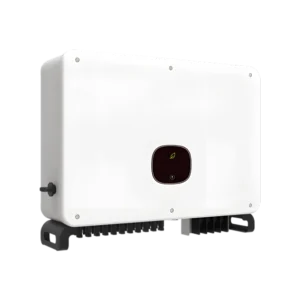
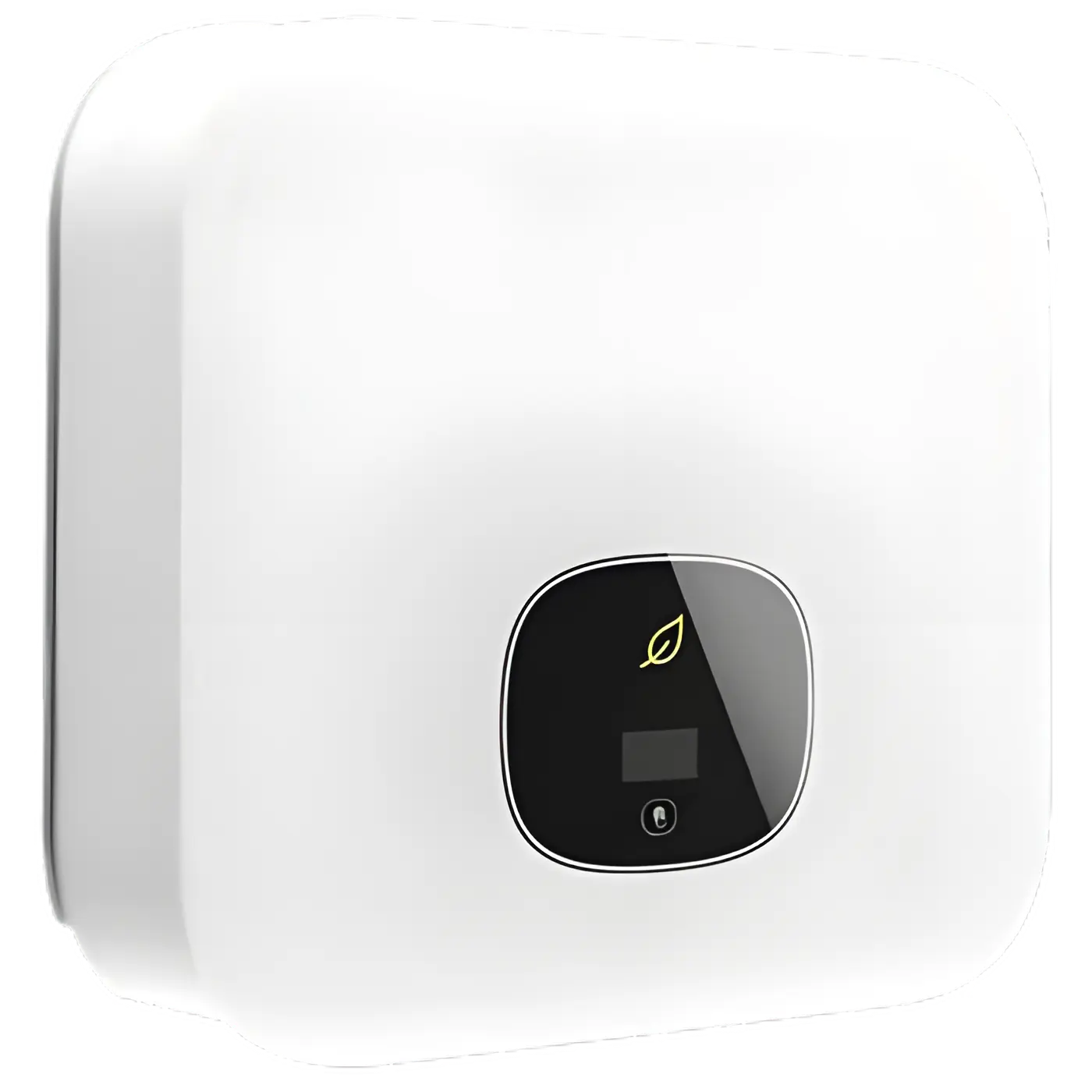
A PV inverter (or solar inverter) is a type of inverter that converts the variable direct current (DC) voltage generated by photovoltaic (PV) solar panels into alternating current (AC) at mains frequency. The converted AC power can be fed back to the commercial power transmission system or supplied to off-grid power systems. As one of the key components of the Balance of System (BOS) in a photovoltaic array system, the PV inverter is compatible with equipment powered by conventional alternating current. Solar inverters are equipped with special functions tailored to photovoltaic arrays, such as maximum power point tracking (MPPT) and anti-islanding protection.
Type | Rated Power | AC Voltage Regulation (Batt. Mode) |
On Grid Residential Inverter | 3-6KW | Single Phase 220-240V 50/6Hz |
3-15KW | Three Phase 380-415V 50/6Hz | |
On Grid Commercial Inverter | 15-40KW | Three Phase 380-415V 50/6Hz |
50-70KW | Three Phase 380-415V 50/6Hz | |
50-250KW | Three Phase 380-415V 50/6Hz | |
Hybrid Residential Inverter | 3-6KW | Three Phase 380-415V/460-500V 50/60Hz |
3-12KW | Single Phase 220-240V 50/6Hz | |
4-12KW | Three Phase 380-415V 50/6Hz | |
Off Grid Residential Inverter | 2-5KW | Single Phase 220-240V 50/60Hz |
3KW/5KW | Single Phase 220-240V 50/60Hz |
Photovoltaic inverters are used internationally in centralized large-scale power plants, distributed industrial/commercial/residential applications, off-grid/microgrids, and special hybrid scenarios. The core function is to convert photovoltaic DC to usable AC, adapting to grid-connected/off-grid and energy storage needs. Mainstream types include centralized, string, micro, and energy storage inverters.
I. Centralized Large-Scale Photovoltaic Power Plants (Core of Global Scale Power Generation)
Typical Scenarios: Ground-mounted power plants in deserts of the Middle East/North Africa/Australia, photovoltaic systems with offshore wind farms in Europe, and large-scale photovoltaic-energy storage bases in North America (≥100MW).
Mainstream Selection: Centralized inverters (500kW–3MW, 1500V system), suitable for flat terrain and uniform sunlight.
Regional Characteristics: The Middle East requires high-temperature resistance up to 50℃ + sand resistance IP65/IP66; Europe prefers natural ester-cooled inverters to meet carbon neutrality requirements.
II. Distributed Commercial and Industrial Solar PV (Local Consumption, Cost Reduction and Efficiency Improvement)
Typical Scenarios: European factory/shopping mall rooftops, US logistics warehouses, Southeast Asian industrial parks (100kW–5MW).
Mainstream Selection: Three-phase string inverters (20kW–110kW), such as the 30kW string inverters used in the BMW factory in Germany, adaptable to complex roof orientations and chimney obstruction.
Regional Characteristics: North American commercial and industrial systems commonly use “string inverters + optimizers”; South Korea requires 1.1 times overload capacity to cope with solar radiation fluctuations; Southeast Asia requires IP66 protection against salt spray/high humidity.
III. Residential Rooftop Solar PV (Residential Self-Consumption + Electricity Sales Revenue)
Typical Scenarios: German/Japanese/Australian villa rooftops, California apartment rooftops (3kW–20kW).
Mainstream Selection: Micro-inverters or single/dual MPPT string inverters; Japan prefers compact designs suitable for small rooftops.
Regional Characteristics: California mandates module-level shutdown, leading to high micro-inverter penetration; Germany promotes integrated “PV + energy storage + charging pile” systems, using energy storage inverters to achieve peak-valley arbitrage.
IV. Off-Grid and Microgrid PV (Areas without Grid Power/Weak Grid)
Typical Scenarios: Sub-Saharan African villages, Amazon rainforest in South America, and inland pastoral areas of Australia (1kW–50kW).
Mainstream Selection: Off-grid/energy storage inverters (integrated charging control), such as the “1kW PV + 2kWh energy storage + inverter” microgrid in Africa, solving power supply issues in areas without electricity.
Regional Characteristics: Africa requires a wide temperature range (-20℃ to 60℃); Southeast Asia’s off-grid systems are equipped with moisture-proof inverters; Australia supports remote monitoring and maintenance.
V. Integrated Photovoltaic and Energy Storage (Coping with Fluctuations and Enhancing Autonomy)
Typical Scenarios: German residential photovoltaic and energy storage, California peak-valley arbitrage, and Australian off-grid residential photovoltaic systems (PV + energy storage + inverter).
Mainstream Selection: Energy storage inverters (such as the inverters with Tesla Powerwall), supporting automatic grid-connected/off-grid switching, suitable for residential and small commercial/industrial applications.
Regional Characteristics: European subsidies promote integrated photovoltaic and energy storage; US ITC policies cover energy storage investment; Japan prefers small-scale energy storage systems of 5kWh–10kWh.